Whenever I travel to China, it never ceases to amaze me how few people can communicate in English and other languages, including those who interact with foreigners as part of their job. China is doing so well in many other areas. Why not language training?
It reminds me of US Americans, most of whom don’t speak a foreign language because, well, the whole world should know English. There are over 1.4 billion Chinese and 40 million overseas Chinese. Perhaps the mentality is similar. I’ve also encountered this in video chats with Chinese colleagues who have reached to me and expressed interest in establishing a partnership. On a recent trip, I did encounter one security guard who smiled and said, “Good morning, welcome, welcome.” 😀
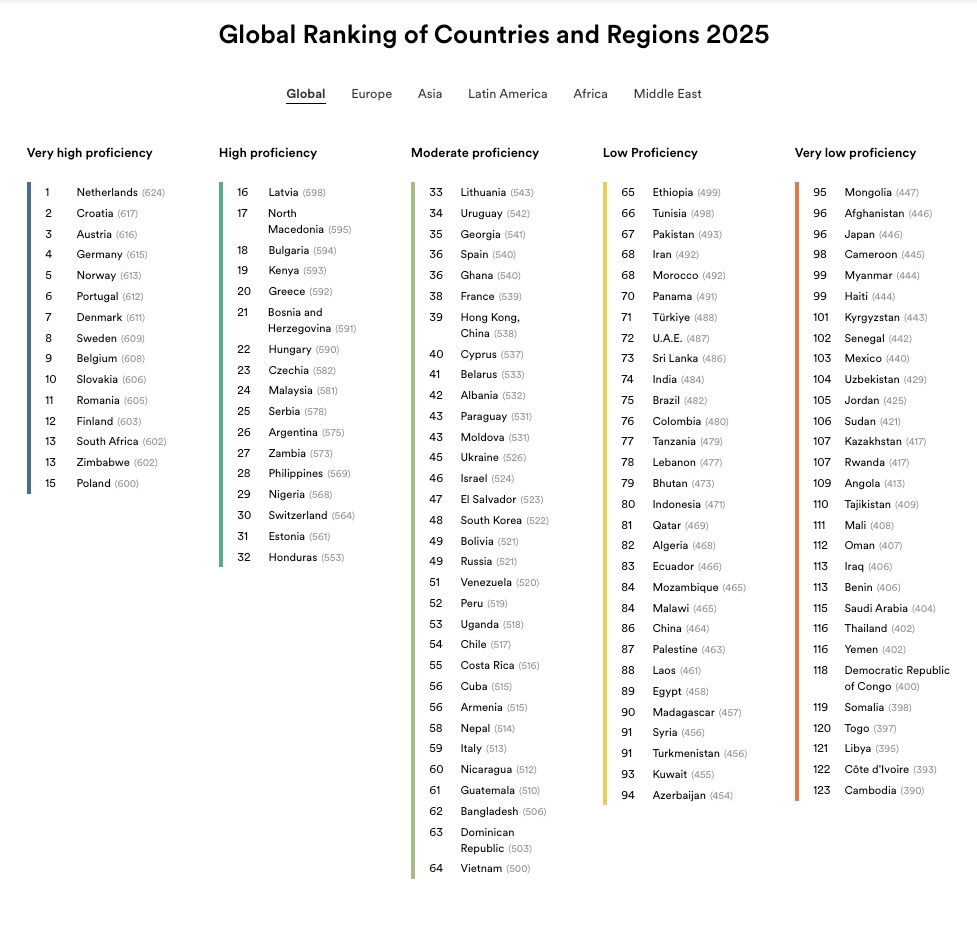
According to EF’s 2025 annual survey, China ranks 86th globally with an EF EPI score of 464, placing it in the low proficiency category. Vietnam ranks 64th with an EF EPI score of 488, which places it in the moderate proficiency category. Thanks to government policies, the investment of parents in their children’s language training, and the efforts of learners themselves, Vietnam is doing much better than Asian countries with significant advantages. Anecdotally, to their credit, the Vietnamese are doing much better than people in Japan, South Korea, Thailand, and other Asian countries.

I walked by a shop in Wuzhen called “Beaven Arts.” Naturally, the first word (and animal) that came to mind was “beaver.” I look around and saw another sign that said “Heaven Art.” Why not check the spelling before having a sign made and installed?
Here’s another sign with the correct spelling.

Another example was banana bread in a breakfast buffet at a five-star hotel. The “banana bag” was tasty but the second word misspelled.

MAA

