This is the original version of a video that’s been making rounds on social media. I created the transcript below followed by a short essay that complements the video and a link to an article entitled Erasure, resistance and agency: lessons on solidarity from Palestinian higher education (August 2026).
How do you feel watching this video?
How would you have reacted?
Who does it remind you of?
MAA
You there, second desk, blue jacket. What is your name?
My name is Alexis.
Alexis, please leave my lecture room. I don’t want to see you at one of my lectures ever again.
I don’t understand.
I am not going to ask a second time. Thank you.
Why are there laws? What are laws for? Anyone?
Social order.
To protect a person’s personal rights.
So that you can rely on the government.
Justice.
Thank you.
Tell me, was I unfair to your classmate just now? Indeed I was. So, why didn’t any of you protest? Why didn’t any of you try and stop me? Why didn’t you want to prevent this injustice? You see, what you have just learnt, you wouldn’t have understood in a thousand hours of lectures unless you lived it. You didn’t say anything because you weren’t affected yourself.
And this attitude speaks against you. And against life. You think it doesn’t concern you, so it’s none of your business? Well, I’m here to say, if you don’t help bring about justice, then one day you too may experience injustice.
And there will be nobody there to stand before you. Truth and justice lives through us all and we must fight for it. Because in life and work, we often live next to each other, but not with each other.
We console ourselves that the problems of others are nothing to do with us. None of our business. And we go home glad at night that we’re spared.
But it’s about standing up for each other. Every day an injustice happens in business, sports or on the tram. Relying on someone else to take care of it is not good enough.
It is our duty to be there for others, to speak up for others when they cannot. I am here to teach you the power of your voice. I want you to learn critical thinking to empower you to stand up for what is right, even if it means going against what everyone else is doing.
Let’s begin.
(Transcribed by TurboScribe.)
Credits
Written, Directed and Produced by Chiara Gizzi
Filmed and Edited by Gareth Carr Music from the “Sounds from Above” album by Fearless Motivation Instrumentals.
CAST: Gary Boulter, Luna Xiao, Maciel Maigua, Natalia Ramires, Shanuka Nagaratnam, Johnny Nguyen, Angela Eleni
This video was inspired by the original story by Dr. Joerg Storm on LinkedIn.
This LinkedIn essay by Dominic Morgan complements the video content.
The Price of Remaining Human (my title)
To stand for justice is to choose a path that will demand everything from you. It is not easy. There is a price, and it is steep. You will lose friends who prefer the comfort of silence or demand your time. You may even lose family members who cannot bear the weight of truth when it contradicts their loyalty to blood or habit. The isolation can feel absolute, a sudden vacuum where community used to be.
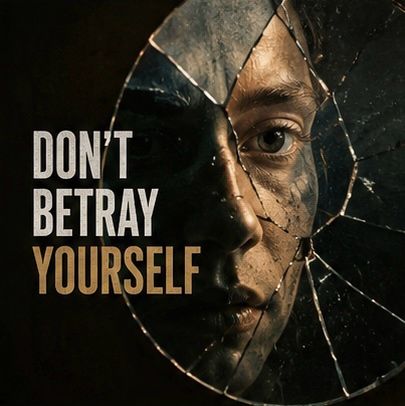
But consider the alternative, to deny your own humanity in the face of horror is a consequence far harder to live with. Complicity is a quiet erosion of the soul. To look away while genocide unfolds, to normalise apartheid, to accept the industrial slaughter of children as collateral damage, this is not neutrality. It is moral suicide. The guilt of inaction does not fade, it calcifies. It becomes a ghost that haunts every mirror, every conversation, every night’s sleep. You can recover from losing those close to you. You cannot recover from betraying your conscience.
History teaches us that those who refused to look away were often ostracized in their time. Yet they remained whole. And crucially, they were never truly alone. When we lose others because they are unwilling to confront the reality of Gaza, the West Bank or Sudan, to the global machinery of oppression, we do not end up empty handed. We gain new friends. We find a new family.
This new kinship is forged in solidarity, not convenience. It crosses borders, religions, and ethnicities. It connects the Palestinian activist in Ramallah with the student organizer in Berlin, the worker in Detroit, and the artist in Cairo. These bonds are stronger than the fragile alliances of comfort because they are rooted in shared values rather than shared habits. They are part of our broader human family, united by the recognition that no one is free until everyone is free.
The cost of taking a stance is high, but the reward is integrity. You retain your self respect. You join a lineage of resisters who chose dignity over safety. And you build a network of support that is resilient, compassionate, and deeply committed to liberation. Do not fear the loss of those who would ask you to compromise your humanity. Fear only the life you would lead if you did so. Stand firm. The right people will find you.
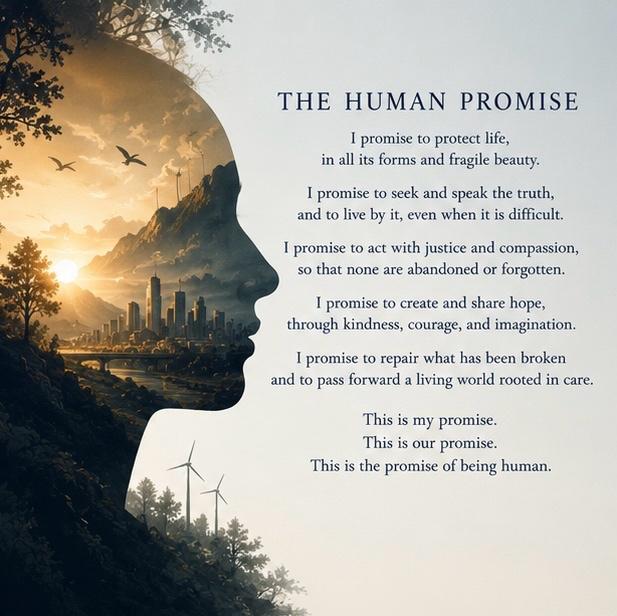
MAA: Dominic’s essay is related to concepts I’ve discussed in blog posts, e.g., allyship and alignment, the latter of which includes The Human Promise.
Last but not least, this blog post is directly related to the issue of standing up for justice: Erasure, resistance and agency: lessons on solidarity from Palestinian higher education (August 2026).