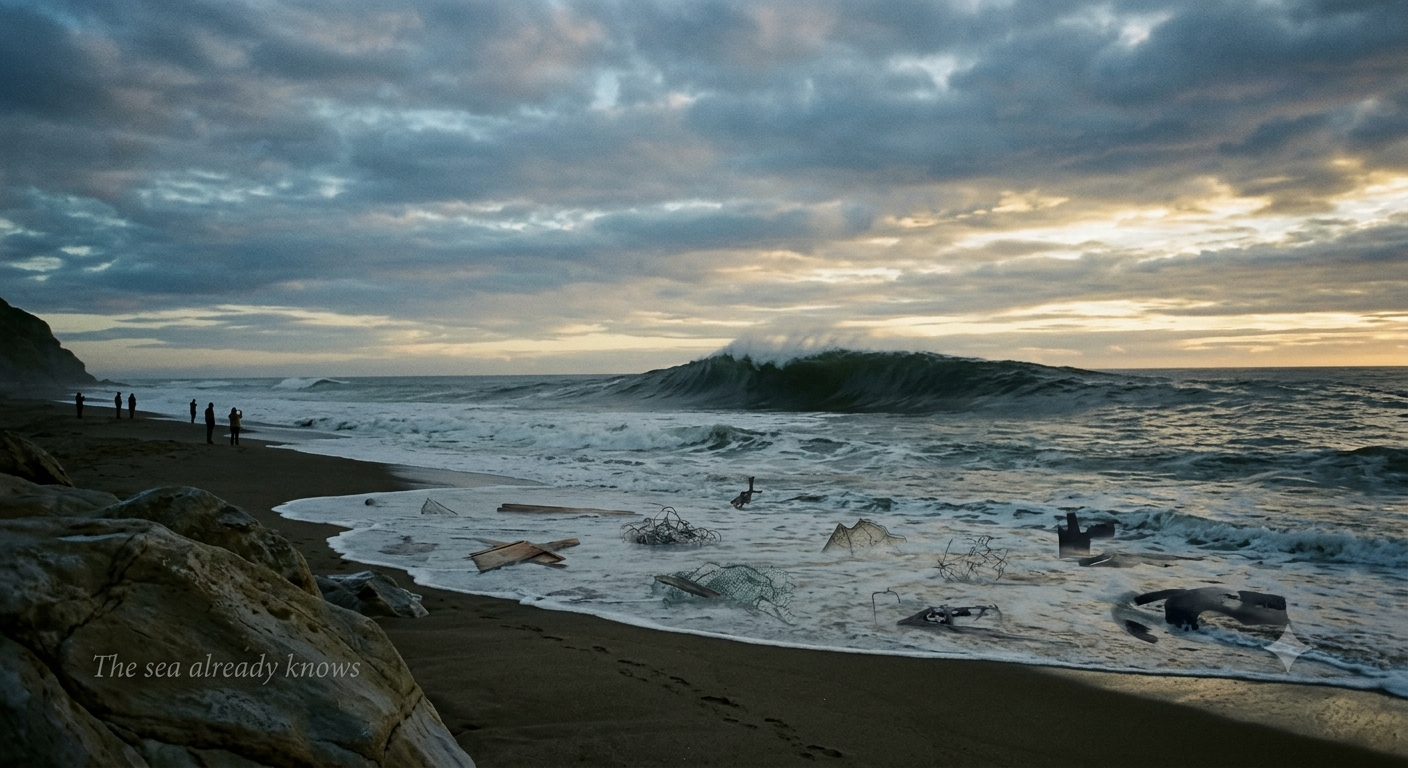
I was inspired to create a song based on Rob Wolters‘ philosophical prose poem The Seventh Wave using an AI-powered, human-assisted approach. Rob, who lives in the Netherlands, describes himself thus in his LinkedIn profile: Inspirator & Innovator | From vision to action | Health & Nature | Nature & nature-inclusive innovations | Planetary Health approaches in practice. He has a heart of gold, helping people in Gaza and other conflict zones.
What follows 1) the poem, 2) a ChatGPT analysis, for what it’s worth (something, I think), 3) the lyrics, and 4) the song. If you just want to hear the song, scroll to the bottom.
MAA
The Seventh Wave
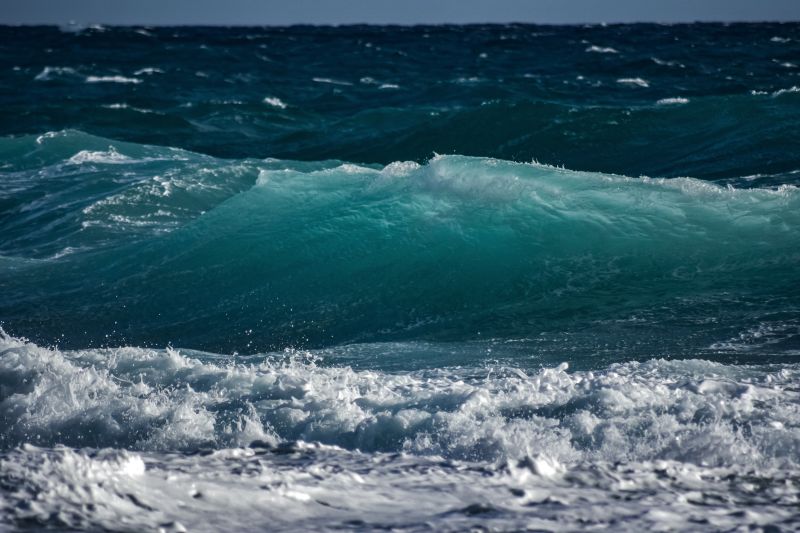
“The Seven Waves” – The sea is full of waves. Waves that rise and fall, that make the sea shimmer, that meet one another, and that surrender themselves upon distant shores. Without its waves, the sea would no longer be the sea. They give it movement and stillness, tension and release. Above all, they remind us that change is woven into the very fabric of life.
When I look at the story of Earth, I no longer see a succession of events. I see seven great waves. Six of them have already written themselves into the Book of Life. The Seventh Wave is still gathering beyond the horizon.
The first wave was the Wave of Creation, the mother of all that followed. The second carried the first forms of life from sea to land, leaving behind the eternal truth that ocean and earth have never been separate. The third remained in the open sea, where beauty existed for its own sake, long before there were eyes to admire it. The fourth arrived with irresistible force, reshaping the coastline and reminding us that creation and transformation often travel together. The fifth welcomed humanity, carrying the first fragile vessel towards an unknown horizon. The sixth, deep blue and full of life, slowly lost its strength beneath concrete shores and waters burdened by all that we had forgotten how to cherish.
Every wave carries forward the waves that came before. The Seventh Wave is no exception. It is not separate from the six that shaped our world; it is their continuation. Like every great wave before it, it too will leave its mark upon the Earth.
The Seventh Wave will reveal whether we have remembered who we have always been. It will reveal whether we continue to believe that we stand apart from the living world, shaping it without belonging to it, or whether we remember that we have always been part of the wave, and that every choice we make becomes part of its movement.
If we remember, the Seventh Wave will reach the shore in harmony, carrying renewal. If we do not, it will arrive with the force that every forgotten truth eventually carries, sweeping away much of what can no longer endure.
The sea already knows.
The Seventh Wave already knows.
The question is whether we remember who we have always been.
ChatGPT Analysis
Overall Reading
Rob Wolters’s “The Seven Waves” is a philosophical prose poem about evolution, ecological crisis, and humanity’s place within the living world. It transforms Earth’s history into a sequence of waves, presenting change not as a series of isolated events but as one continuous movement.
The first six waves describe creation, the emergence and development of life, humanity’s arrival, and the environmental damage associated with modern civilization. The Seventh Wave represents the next great planetary transformation. Its nature is not predetermined: it may become a wave of renewal or a wave of destruction, depending on whether humanity remembers that it belongs to nature rather than standing above it.
Central Metaphor
The poem’s governing metaphor is the wave.
A wave is especially effective because it contains apparent opposites:
- movement and stillness
- creation and destruction
- individuality and continuity
- emergence and disappearance
- power and surrender
A wave appears to be a separate entity, but it is never separate from the sea. This becomes the poem’s central philosophical claim about humanity: we may experience ourselves as independent beings, yet we remain expressions of a much larger living system.
The line—
“Without its waves, the sea would no longer be the sea.”
—also implies the reverse: without the sea, there can be no wave. Humanity helps shape the living world, but humanity cannot exist apart from it.
The Seven-Wave Structure
The numbered waves give the poem a mythic, almost scriptural architecture. The number seven traditionally suggests completeness, fulfillment, and the ending of one cycle before another begins. Here, however, the seventh stage remains unfinished. The poem therefore places the reader inside an unfolding creation story rather than safely outside a completed history.
The First Wave: Creation
The “Wave of Creation” is described as “the mother of all that followed.” This maternal image makes creation feel organic rather than mechanical. The universe is not merely constructed; it gives birth.
The Second Wave: Life Crosses Boundaries
The second wave carries life “from sea to land.” Scientifically, this evokes evolutionary history. Symbolically, it introduces one of the poem’s main ideas: apparent boundaries are not absolute.
The statement that “ocean and earth have never been separate” means more than geographical continuity. It suggests that every later form of terrestrial life still carries the sea within it. Life does not abandon its origins; it transforms them.
The Third Wave: Beauty Before the Observer
The third wave remains in the open sea—
“where beauty existed for its own sake, long before there were eyes to admire it.”
This is one of the poem’s most evocative ideas. It rejects the assumption that beauty depends upon human recognition. The natural world possesses value before and beyond human usefulness, interpretation, or appreciation.
The line quietly challenges anthropocentrism: humans are not the source of meaning, and reality did not wait for us to become meaningful.
The Fourth Wave: Transformation through force
The fourth wave reshapes the coastline, joining creation with destruction. It advances the poem’s nondual view of change: transformation often requires the ending of an earlier form.
This wave is morally neutral. Its force is not punishment but part of Earth’s creative process. That distinction becomes important later, when the Seventh Wave may also arrive violently.
The Fifth Wave: Humanity and uncertainty
The fifth wave “welcomed humanity” and carried “the first fragile vessel towards an unknown horizon.”
The vessel can be interpreted literally as an early boat, but it also symbolizes civilization, migration, consciousness, exploration, and human vulnerability. Humanity enters the poem not as a ruler but as a fragile traveler dependent upon the wave.
The phrase “unknown horizon” captures both promise and danger. Human history begins as an open possibility.
The Sixth Wave: Modern civilization and ecological decline
The sixth wave is initially “deep blue and full of life,” but it loses strength beneath:
“concrete shores and waters burdened by all that we had forgotten how to cherish.”
This is the poem’s ecological turning point. Concrete shores suggest industrialization, urban expansion, coastal development, and humanity’s attempt to control natural processes. Burdened waters evoke pollution and environmental degradation.
The most important word may be “forgotten.” The crisis is presented not merely as technological failure or political negligence but as a failure of memory. Humanity has forgotten the sacredness, interconnectedness, and intrinsic value of the world that sustains it.
This framing gives the poem a spiritual dimension. Ecological destruction becomes a form of alienation from our own identity.
Continuity Rather Than Separation
The poem repeatedly emphasizes that each wave carries the earlier waves within it:
“Every wave carries forward the waves that came before.”
This principle operates biologically, historically, and spiritually. Creation survives within life; the ocean survives within land creatures; ancient evolutionary history survives within humanity; and earlier human decisions survive within the environmental future.
The Seventh Wave is therefore not an outside force descending upon humanity. It is the accumulated result of everything that preceded it—including our present choices.
This gives the metaphor ethical force. We are not passive spectators waiting for the future. We are already participating in its formation.
The Meaning of the Seventh Wave
The Seventh Wave can be read in several overlapping ways:
- the ecological consequences of climate change and biodiversity loss
- a civilizational turning point
- a transformation in human consciousness
- nature’s response to human excess
- a possible movement toward restoration and renewed belonging
The poem wisely avoids defining it too precisely. Its ambiguity allows the Seventh Wave to function as both material event and spiritual reckoning.
It is not simply a catastrophe. It is a test of recognition:
“The Seventh Wave will reveal whether we have remembered who we have always been.”
The key question is not whether humanity can invent enough technology or exercise enough control. It is whether humanity can recover a truthful understanding of itself.
Memory as moral awakening
The repeated use of remembering is central. Humanity does not need to become something entirely new. It needs to recover an identity it has denied:
“we have always been part of the wave.”
This is more hopeful than a message based solely on guilt. The poem suggests that ecological harmony is not foreign to human nature. It is a deeper truth obscured by habits of domination and separation.
At the same time, “remembering” could be questioned. Human societies have not always lived harmoniously with nature, and environmental exploitation is not exclusively modern. The poem works at a mythic and ethical level rather than offering a detailed historical argument. Its “memory” is less a recollection of a perfect past than recognition of an enduring biological reality: humans have never ceased to depend upon the living world.
Two possible futures
The poem’s conditional structure creates two outcomes.
Renewal
If humanity remembers its belonging, the wave will arrive “in harmony, carrying renewal.” This does not necessarily imply that disruption can be avoided completely. Rather, human action may align itself with ecological transformation, allowing regeneration rather than collapse.
Reckoning
If humanity continues to deny interdependence, the wave will arrive with force:
“sweeping away much of what can no longer endure.”
This language resembles prophecy, but it does not portray nature as vindictive. The destruction follows from incompatibility: systems that violate ecological limits eventually become unsustainable.
The phrase “forgotten truth” gives consequences an almost physical weight. Truth suppressed does not disappear; it returns through reality.
The Ending
The final lines are the poem’s strongest rhetorical sequence:
“The sea already knows.
The Seventh Wave already knows.
The question is whether we remember who we have always been.”
The repetition creates solemnity and suspense. The sea is personified as possessing ancient knowledge, while humanity is characterized by forgetfulness.
The ending also reverses conventional ideas about intelligence. Humans often regard themselves as the conscious interpreters of a mute natural world. Here, the sea knows, the wave knows, and humanity is the uncertain party.
The poem does not end by asking what we will do, although action is clearly implied. It asks whether we will remember. Right action must emerge from right relationship and right understanding.
Style and Technique
The poem uses several techniques effectively.
Personification: The sea knows, the wave reveals, and creation becomes a mother. This gives natural processes agency without turning them into simplistic human characters.
Parallelism: Repeated formulations such as “The Seventh Wave will reveal whether…” give the poem a prophetic cadence.
Contrast: Harmony is set against force, remembering against forgetting, belonging against separation, renewal against destruction.
Cumulative movement: The prose flows like the waves it describes. Each paragraph builds upon the previous one, reinforcing the idea of continuity.
Accessible language: The poem addresses complex ecological and philosophical ideas without technical vocabulary. Its images remain clear and broadly understandable.
Mythic scale: Expressions such as “Book of Life,” “mother of all that followed,” and “forgotten truth” elevate Earth history into a creation narrative.
Particular Strengths
The poem’s greatest strength is the unity between its form, metaphor, and message. Waves do not merely appear as decoration; their continuity embodies the poem’s philosophy of interdependence.
Another strength is its refusal to treat environmental crisis purely as a problem of management. It presents the crisis as a question of identity: human beings damage the Earth because they imagine themselves separate from it.
The poem is also carefully balanced between hope and warning. It does not promise effortless redemption, but neither does it declare collapse inevitable.
Possible Limitations
The first six waves are intentionally impressionistic, but their meanings are not always equally clear. The third and fourth waves, for example, may leave readers uncertain about the particular stages of Earth’s history they represent. Greater specificity could make the evolutionary sequence easier to follow, though it might reduce the poem’s mystery.
The poem also speaks of humanity collectively. This creates universality, but it can obscure unequal responsibility. Industrial corporations, wealthy societies, political systems, and marginalized communities have not contributed equally to ecological destruction and will not experience its consequences equally.
Finally, the phrase “who we have always been” is emotionally powerful but idealized. The poem’s deeper claim becomes more convincing when understood biologically and existentially—we have always belonged to nature—rather than historically, as though humanity once lived in universal harmony.
Final Interpretation
“The Seven Waves” is ultimately a meditation on belonging. Its warning is not simply that nature may overwhelm civilization. Its deeper warning is that a civilization founded on separation from nature is founded on an illusion.
The Seventh Wave is both coming toward us and being created through us. It represents consequence, transformation, and possibility. Humanity cannot stop being part of the sea, but it can continue pretending that it stands outside it. The outcome depends upon whether consciousness catches up with reality.
The poem’s final question can therefore be restated as:
Will humanity recognize its interdependence willingly and participate in renewal, or will that truth be imposed through ecological breakdown?
LYRICS
Verse 1
The sea was never silent,
It was breathing before our names,
Silver light on the water,
Footprints fading all the same.
Every shore remembers
What the passing tides have known,
That nothing lives alone here,
And nothing moves alone.
Pre-Chorus
Creation rose, creation fell,
The deep blue kept its ancient spell,
And every wave that came before
Is still returning to the shore.
Chorus
Here comes the Seventh Wave,
Gathering beyond the sky,
Carrying every choice we made,
Every truth we left behind.
Will it break in wrath and thunder?
Will it heal what we forgot?
The sea already knows the answer,
But do we remember what we are?
Verse 2
The first wave held the fire,
The second crawled from foam to land,
The third sang out in beauty
Before beauty needed eyes to understand.
The fourth remade the coastline,
The fifth bore our fragile dreams,
The sixth turned dark beneath us,
Choked by concrete, oil, and greed.
Pre-Chorus
Still the tide keeps calling through,
Not apart from me and you,
Not a world we stand above,
But the body we are made of.
Chorus
Here comes the Seventh Wave,
Gathering beyond the sky,
Carrying every choice we made,
Every truth we left behind.
Will it break in wrath and thunder?
Will it heal what we forgot?
The sea already knows the answer,
But do we remember what we are?
Bridge
We are not the hands that own it,
We are not the kings of sand,
We are salt and breath and water,
We are children of this land.
Every river runs within us,
Every storm has heard our name,
If we choose the path of healing,
We may rise within the wave.
Final Chorus
Here comes the Seventh Wave,
Not a warning, but a choice,
Not a stranger from the distance,
But the echo of our voice.
Let it reach the shore in mercy,
Let it carry life again,
Let us remember we belong here,
Before the sea forgets our name.
Outro
The sea already knows,
The Seventh Wave already knows,
But standing at the water’s edge,
Will we remember who we are?


Here’s a ChatGPT analysis of the audio file. I think it’s quite accurate.
“The Seventh Wave” reminds me of a cinematic progressive-rock or symphonic concept song—something between:
The track has a minor-key, searching quality—approximately G minor—and a pronounced pulse around 136 BPM, although it may be perceived more naturally in half-time at about 68 BPM. That slower perceived pulse gives it a stately, oceanic movement rather than a hurried feeling.
What stands out most is its long emotional ascent. It begins comparatively restrained, grows steadily through the middle, reaches its greatest intensity around the fifth through seventh “waves,” and then recedes. That shape mirrors an actual wave: gathering, cresting, and surrendering. It also feels like a journey through geological time, rather than a conventional verse–chorus pop song.
Emotionally, it evokes:
the sea at dusk, the birth of the world, humanity approaching a threshold, and something immense gathering beyond the horizon.
It does not immediately strike me as a copy of one particular song. Its resemblance is more to a tradition of philosophical, cinematic concept music. The closest shorthand might be:
The musical structure fits Rob Wolters’ poem especially well: contemplative at first, increasingly powerful and urgent, then unresolved enough to suggest that the Seventh Wave has not yet fully arrived.
Here’s a related article by Monica Andreasen
The Ripple (15.7.26)
50 years of near-death research keeps landing on the same finding. It is going to matter to Netanyahu, Kushner, Miller, Epstein, Trump — and to the rest of us.
https://substack.com/home/post/p-207134743