A shoutout to Andy Pring and Creative Writing for Social Change.
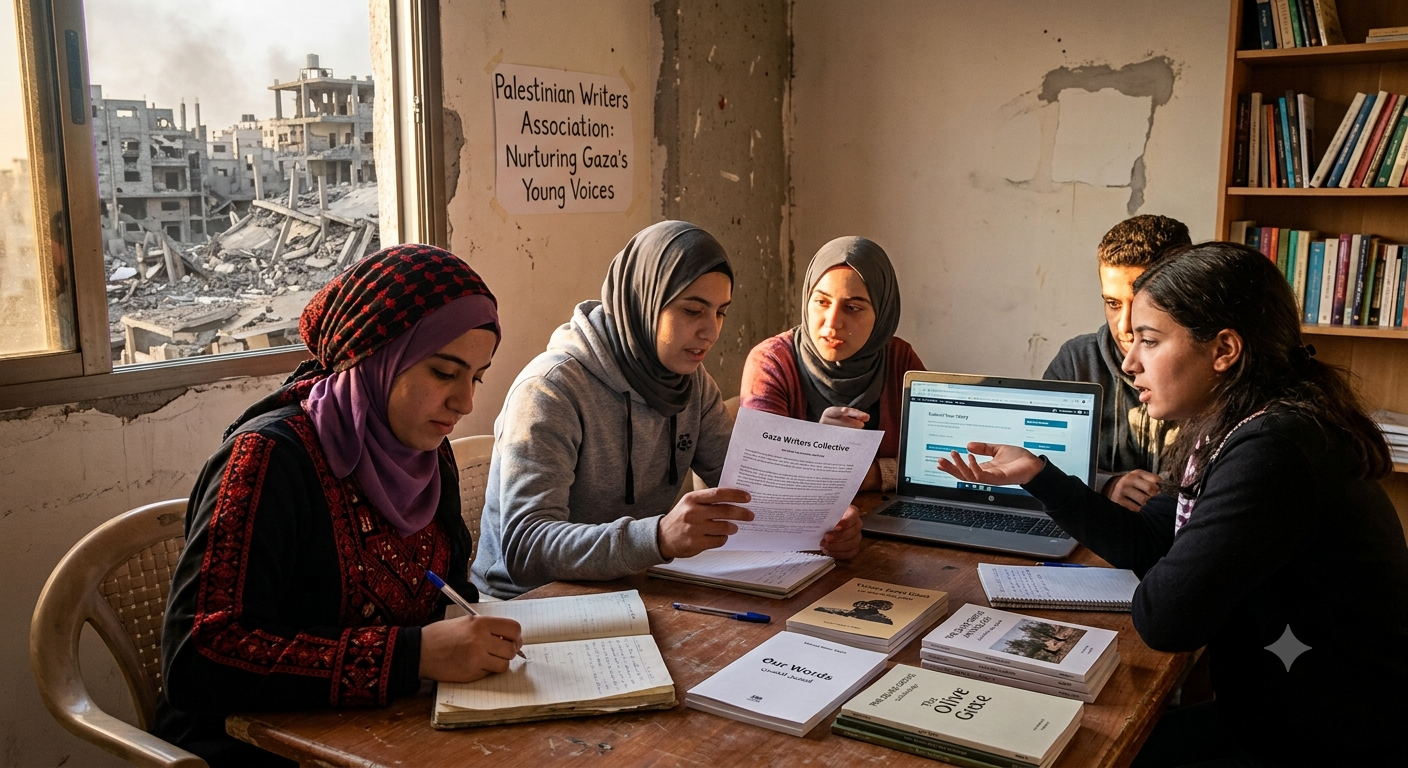
This page is for young Palestinian poets, writers, students, and storytellers in Gaza who want to share their work with the world. It includes literary magazines, youth publications, Palestinian platforms, anthologies, and media outlets that may accept poetry, essays, short stories, testimony, creative nonfiction, translation, visual art, and reported writing. Note: I created this list with a little help from my digital friend.
Because submission deadlines and guidelines change often, writers should always check the current submission page before sending work. Writers in Gaza should also consider safety, privacy, emotional readiness, and copyright before publishing personal stories or identifying details.
1. Start Here: Mentored Palestinian Platforms
Put We Are Not Numbers, Fikra, Gaza Verse, and Polyphony’s Palestine Series first.
2. Publish in Arabic or English
Highlight Fikra, ArabLit, Arab Literature Translation, and Voices of Palestine.
3. For Teenage Writers
List Polyphony Lit, Teen Writers Project, Cathartic Youth Literary Magazine, Blue Marble Review, and NewPages’ youth guide.
4. For Essays, Testimony, and Journalism
List Electronic Intifada, Palestine Square, Mondoweiss, +972 Magazine, Middle East Eye, and MEMO.
5. Submission Safety Tips for Writers in Gaza
Use a pen name if needed. Remove exact addresses, shelter locations, phone numbers, and identifying details of vulnerable people. Keep a copy of every submitted piece. Do not pay submission fees unless the publication is reputable and the writer understands the cost. Submit the same poem or essay to multiple places only if simultaneous submissions are allowed. For trauma-based writing, the writer should decide what they are emotionally ready to share.
While Israel has targeted and killed hundreds of Palestinian journalists, including Anas Al-sharif, with whom I was in touch just hours before his assassination on 10 August 2025, the world continues to receive updates from writers, poets, artists, and others in Gaza. We should do everything in our power to amplify their stories.
MAA
| Platform | Best for | Notes |
| We Are Not Numbers | Young Palestinian writers, personal essays, stories, poems, mentoring | One of the strongest fits. WANN is open to Palestinian youth ages 18–30 who can write and communicate in English, including writers in Gaza, the West Bank, Jerusalem, refugee camps, and the diaspora. It pairs emerging Palestinian writers with mentors and publishes their work. WANN was co-founded by the late Gazan writer Refaat Alareer, who was assassinated by Israel on 6 December 2023. |
| Fikra Magazine | Poetry, essays, short stories, visual art | Online Palestinian literary magazine founded in 2022. Publishes in Arabic and English; accepts poetry, fiction, essays, and visual art. |
| Gaza Verse/Gaza Poets Society | Poetry, prose, essays, visual art, photography | A Gaza-focused literary/artistic journal. Recent calls welcomed submissions from creators in poetry, prose, art, photography, and essays; check Instagram for current deadlines. |
| Voices of Palestine anthology/ Human Rights Art Movement | Poetry, essays, short stories, firsthand accounts | Accepts work in English or Arabic; guidelines mention up to 3 poems and/or one essay/short story up to 2,500 words. Good for lived-experience writing. |
| Polyphony Lit: Palestine Series | Palestinian creators ages 12–25 | A youth-oriented call seeking poetry, fiction, creative nonfiction, nonfiction articles, and visual art from Palestinian creators ages 12–25. |
Arab/SWANA Literary Magazines
| Platform | Best for | Notes |
| Mizna | Poetry, prose, hybrid literary work, visual art | A respected SWANA literary and arts journal. It publishes a biannual print journal and Mizna Online, with work reflecting the SWANA region and diaspora. Submission themes change by issue. |
| ArabLit/ArabLit Quarterly | Arabic literature, translation, poetry, fiction, essays | Focuses on Arabic literature and Arabic literature in translation. Their submissions portal may close between calls, but they also list submission information and calls. |
| Arab Literature Translation | Arabic/English poetry, fiction, nonfiction, translation | Accepts submissions in Arabic or English; guidelines include up to three poems, fiction/nonfiction up to 5,000 words, and translations with the original text and translator’s note. |
| The Markaz Review | Poetry, fiction, nonfiction, criticism, translation, art | Publishes SWANA/MENA-focused work and invites fiction, nonfiction, poetry, translation, criticism, art, photography, film, and hybrid forms. Check current themes and fees carefully. |
Youth Literary Magazines Open to International Writers
| Platform | Best for | Notes |
| Polyphony Lit | High school writers worldwide | Student-run international literary magazine for high school writers. Accepts creative writing from students worldwide and provides editorial feedback on submissions. |
| Teen Writers Project | Teen writing in English | Accepts fiction, nonfiction, poetry, essays, memoirs, short plays, and photo essays; submissions must be in English. |
| Cathartic Youth Literary Magazine | Middle school to college-age writers; mental health, personal expression | Youth platform focused on writing as catharsis and mental health expression. Good for reflective poetry, essays, and prose. |
| Blue Marble Review/Other Youth Journals | Writers ages roughly 13–22 | NewPages’ Young Writers Guide lists youth publications, including journals accepting poetry, fiction, nonfiction, photography, and art from young writers. |
| Adroit Journal Opportunities | Advanced young poets and prose writers | The Adroit Journal runs a competitive summer mentorship in poetry, fiction, and creative nonfiction, and has guidelines for student writers. |
News, Essay, and Opinion Outlets for Polished Nonfiction
These are better for reported pieces, personal essays with analysis, opinion, culture writing, or testimony, not usually for poetry.
| Platform | Best for | Notes |
| The Electronic Intifada | Original analysis, reportage, visual storytelling | Prioritizes writing by contributors in Palestine and says it will work with writers whose first language is not English if they have a compelling story. |
| Palestine Square/Institute for Palestine Studies | Opinion, analysis, culture, historical narratives | Articles should be relevant to Palestine or Palestinian-Israeli affairs and generally 800–1,200 words. They prefer clear, direct writing grounded in facts. |
| Mondoweiss | Op-eds, analysis, Palestine-related commentary | Has a submissions guide explaining what editors look for and how to pitch. |
| +972 Magazine | Reported pieces and op-eds | Accepts pitches for reported pieces and unsolicited op-eds; it focuses on Israel-Palestine reporting and analysis. |
| Middle East Eye | Features, stories, pitches | Lists a submissions email for stories and pitches. |
| Middle East Monitor | Unsolicited articles on Middle East topics | Accepts unsolicited articles of around 800–1,200 words but notes that unsolicited articles are unpaid. |
| The New Humanitarian | Produces fact-based journalism from the heart of conflicts and disasters to build understanding of how to improve the lives of the millions of people affected by humanitarian crises around the world. | Pitch Us a Story. Their pitch page invites story pitches and gives guidance on who to contact. Good fit for Gaza writers who can write about education, displacement, aid access, health, food insecurity, students, families, or humanitarian systems from direct experience. Best approached with a clear pitch rather than a finished poem or personal reflection. |
| Al Jazeera | Reported stories, opinion, first-person essays, humanitarian narratives | High-profile outlet with strong Gaza/Palestine relevance. Best approached with a clear, timely pitch. |
| The Guardian | International opinion, first-person essays, reported features | Very competitive. Best for polished pieces with a strong international angle and a concise pitch. |
| Pearls and Irritations /John Menadue | Opinion essays, political commentary, Palestine/Israel analysis, advocacy-oriented essays Good fit for polished nonfiction by Gaza writers, especially pieces about humanitarian conditions, international responsibility, media narratives, education under war, displacement, aid, justice, and lived experience connected to broader political analysis. Not a primary venue for poems or short fiction. | We welcome your contributions. We are greatly indebted to you and other writers in helping to promote discussion on important public issues. Pearls and Irritations publishes more than 70 posts a week. We do not pay writers or our editor-in-chief/founder. Copyright for articles published by Pearls and Irritations is held by the publisher “© John Menadue”. Style guide |
Self-Publishing and Building an Audience
| Platform | Best for | Notes |
| Substack | Poems, diary-style writing, short essays, testimony, letters from Gaza, reflections on education, translation projects, serialized memoirs, and updates for supporters. Good fit for writers who want to publish regularly, build an international audience, and keep ownership of their voice. Writers can publish in English, Arabic, or both. Best for writers who have someone who can help with editing, formatting, promotion, and safety review before posts go public. | Examples: 1) Samah Zaqout’s Samah’s Substack, 2) Gaza Speaks When the World Falls Silent, (Zines from Gaza), and 3) Re-engineering Consciousness (Zines from Gaza) Caution: Substack is easy to start, but writers need support. A young writer in Gaza may need help with: checking English, choosing titles, writing short bios, protecting identity, avoiding exact location details, deciding whether to use a pen name, making posts visually readable, and sharing links safely. |
| Medium | ||
| WordPress.com | ||
| Instagram poetry pages | ||
| Polished essays and professional writing, networking, information sharing |


Here’s another outlet. I’ll keep adding them as people share them with me or I find out about them. https://prismreports.org/2026/06/01/gaza-child-labor/
Here’s another one that I plan to add: https://www.equator.org/articles/moral-stupidity-gaza-palestine-abdaljawad-omar
And another one: https://www.palestinechronicle.com/from-metaphor-to-testimony-how-gaza-wrote-itself-during-the-war/
A School Folded Into a Tent (2.8.26) https://thecontrapuntal.com/a-school-folded-into-a-tent/
The genocide’s other cost: the freezing of Palestinian bank accounts (27.7.26) https://prismreports.org/2026/07/27/palestinian-bank-accounts/
WAITING FOR THE SUN. A THOUSAND DAYS OF GENOCIDE (29.7.26) https://unponteper.it/en/waiting-for-the-sun-a-thousand-days-of-genocide/
How Genocide Changes the Meaning of Time in Gaza (5.8.26) https://dawnmena.org/how-genocide-changes-the-meaning-of-time-in-gaza/
The Patients Israel Won’t Let Leave Gaza (2.9.26) https://newlinesmag.com/reportage/the-patients-israel-wont-let-leave-gaza/
Smartphones hold entire archives of life, memories, and evidence in Gaza (28.9.26) https://prismreports.org/2026/09/28/smartphones-gaza-genocide/
Sick from Diabetes and Nostalgia (7.10.26) https://progressive.org/sick-from-diabetes-and-nostalgia-mushtaha-20261007/