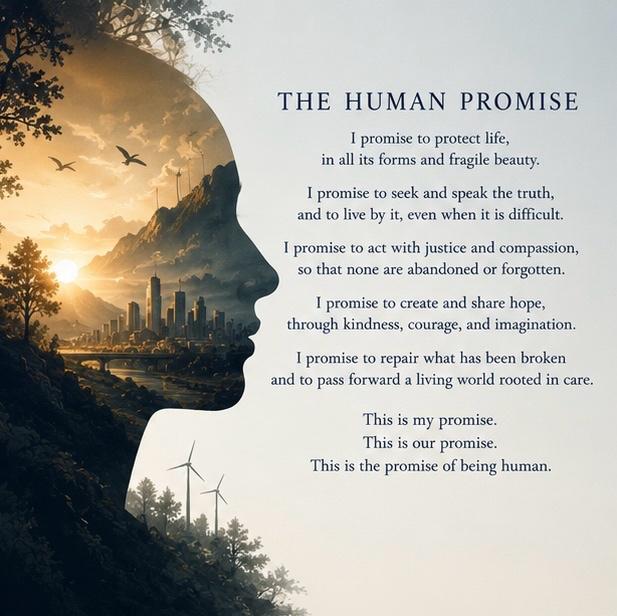
I asked ChatGPT Plus to analyze the Human Promise in the context of Buddhism, Christianity, Hinduism, Islam, and Judaism. Take a moment to think about what people, including political leaders, who represent these religions say and do. A case in point is the ongoing Israeli-sponsored genocide in Gaza. Judaism and genocide mix like oil and water. The genocide is rooted in Zionism, a cult-like racist ideology. The same applies to many evangelical Christians in the US who are also nationalists and Israel, i.e., genocide, supporters.
Analysis
The Human Promise is not tied to any one religion – think of it as a global form of secular humanism – but its five commitments reflect a deep moral convergence among Christianity, Islam, Judaism, Buddhism, and Hinduism. Each tradition grounds them differently—divine command, covenant, compassion, karma, dharma, or recognition of shared being—but they often lead toward remarkably similar conduct.
| Human Promise | Christianity | Islam | Judaism | Buddhism | Hinduism |
|---|---|---|---|---|---|
| Protect life | Human beings bear God’s image; love of neighbor includes protecting the vulnerable. | Human life is sacred; saving one life is likened to saving all humanity. | Pikuach nefesh—preserving life overrides nearly every other commandment. | The first precept rejects killing; compassion extends to all sentient beings. | Ahimsa, non-harm, calls for reverence toward living beings. |
| Seek and speak truth | Truthfulness reflects God’s nature; Jesus identifies himself with truth. | Truthfulness, sincerity, and trustworthy testimony are religious duties. | Emet—truth—is central to justice, covenant, and ethical life. | Right Speech rejects lying, cruelty, and divisive language; wisdom seeks reality without illusion. | Satya, truthfulness, is a cardinal virtue and part of the path toward liberation. |
| Act with justice and compassion | Love of God is inseparable from care for the poor, oppressed, stranger, and enemy. | ‘Adl—justice—and rahmah—mercy—are central qualities of faithful life. | Tzedek and chesed unite justice with loving-kindness; no one should be abandoned. | Karuna and metta cultivate compassion and loving-kindness toward all beings. | Dharma requires righteous action; seva encourages selfless service to others. |
| Create and share hope | Hope rests in resurrection, redemption, grace, and the possibility of renewal. | Hope in God’s mercy forbids despair; charity and steadfastness sustain the community. | Hope appears in teshuvah—return and moral transformation—and in the prophetic vision of a repaired world. | Hope arises from the possibility of awakening and freedom from suffering; compassionate action helps others along that path. | Spiritual growth, rebirth, devotion, and liberation affirm that transformation remains possible. |
| Repair what has been broken | Repentance, reconciliation, forgiveness, and peacemaking restore relationships. | Tawbah, restitution, forgiveness, and reconciliation repair harm and restore moral balance. | Teshuvah requires acknowledging wrong, making amends, and changing; tikkun olam expresses responsibility for repairing the world. | Harm is addressed through awareness, ethical correction, reconciliation, and compassionate action. | Karma makes actions consequential; dharma, repentance, self-discipline, and service help restore harmony. |
There are important differences. Christianity, Islam, and Judaism generally understand moral responsibility in relation to one God. Hindu traditions often interpret it through dharma, karma, devotion, and the divine presence within life. Buddhism does not depend upon a creator God; it grounds ethics in interdependence, compassion, and liberation from suffering.
The final line—“This is the promise of being human”—therefore makes a distinctly interfaith claim: one need not erase religious differences to recognize a shared responsibility to protect life, tell the truth, practice justice, sustain hope, and repair harm. Believers may understand these promises as responses to God or sacred duty; nonbelievers may understand them as obligations arising from human dignity and our dependence upon one another.
In that sense, the Human Promise is best understood not as a substitute for religion, but as common ethical ground on which people of different religions—and people with no religion—can stand together.

