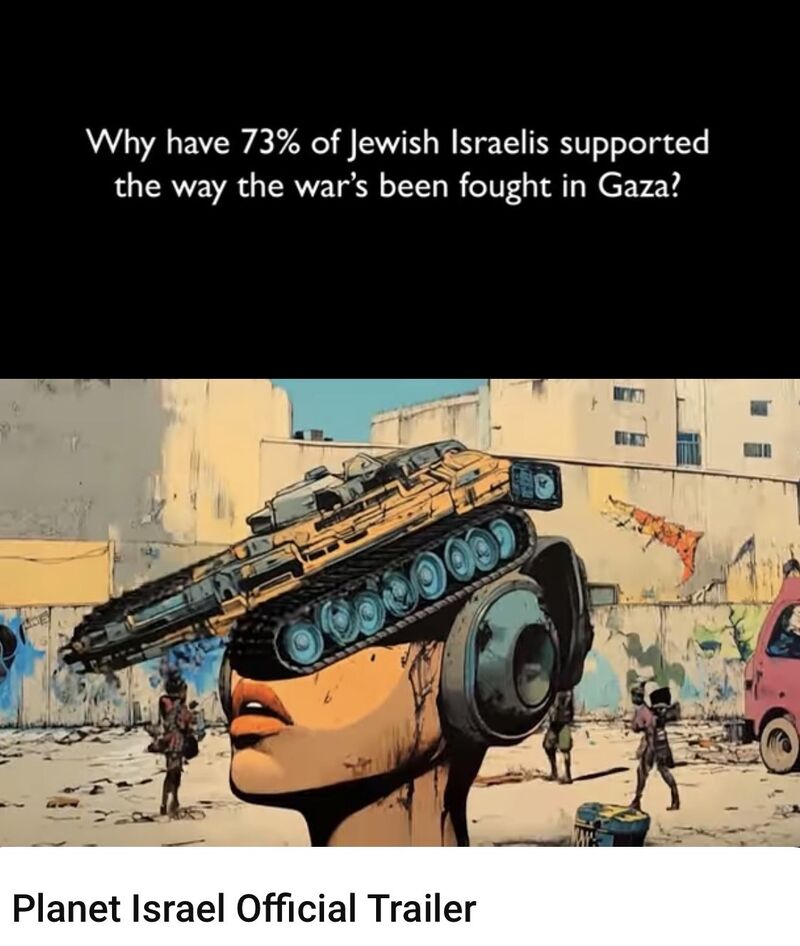
This is a LinkedIn post by Bystanders No More. Here are links to the trailer (1:35) and an interview (26 min) with the director Gillian Moseley.
Drawing on psychology, history, and lived experience, Planet Israel explores how trauma, identity, and political narratives shape Israeli society—and how these forces contribute to the ongoing war in Gaza.
In this discussion, Gillian reflects on:
The role of trauma and “collective psychology” in shaping public attitudes
Why so many Israelis support the war effort
The concept of responsibility—and whether trauma can ever justify violence
Media narratives and the “parallel realities” shaping perception
The role of international pressure and shifting global opinion
Whether there is still hope—and what it might take to break the cycle
In a separate post I’ll include a long comment about the notion of alignment as humanity’s greatest strength. It also has great relevance to the work of international educators. Stay tuned.
MAA
What happens when unhealed collective trauma is weaponised by politicians and broadcast as truth?
That is the question Gillian Mosely set out to answer in “Planet Israel: A Cautionary Tale”, which opens across UK cinemas on 5 June. Mosely is British-American and Jewish. She grew up believing in Zionism. She wanted to understand how a people shaped by historical persecution could exhibit such moral and humanitarian numbness toward the people on their doorstep.
What she found was darker than she expected. Not just a story about Israel and Palestine, but a recognisable architecture: how nationalist governments instrumentalise collective trauma to construct populations resistant to information about themselves. Students of empire will find the pattern familiar.
The film is also clear on something Western governments have been slow to absorb. This is not a Netanyahu problem. The mechanisms it documents operate at the level of Israeli society: its education system, its media, its military psychology. They do not change with a prime minister. Waiting for new leadership, the film implies, is not a strategy. It is another way of not looking.
Which forces into view a harder question viewers can’t avoid. If this mechanism is documented, observable, and by now well-evidenced, why has the rest of the world been so willing to sustain it? Not merely to tolerate it, but to fund it, arm it, trade with it, and provide it diplomatic cover at every turn.
That is not a question about Israeli psychology. It is a question about our institutions.
Mosely is direct about this in the film and in conversation. She believes external pressure is not only necessary but is already beginning to work. Europeans discussing trade restrictions with Israel and AIPAC losing its grip in Washington are conversations that were unimaginable just a few years ago. The window is open and her hope is that we use it.
At the close of a recent Q&A, Mosely added something unprompted. The world’s Jews need to ask whether what is being done in their name represents them. And if it does not, to actually do something about that.
Mosely believes politicians will catch up with where public opinion has moved. Institutions face an uncomfortable calculation in the meantime. Standing still carries deepening reputational costs as Jewish opinion itself redraws the line. Moving carries political costs from a lobby whose influence may not be what it was but it can’t be ignored.
Neither position is safe. That dilemma does not resolve itself.