Samah, a young woman who lives in Gaza and whom I have known since last year, gave me permission to share this essay about her life during the ongoing genocide. Like many writers, the act of writing is cathartic.
Below is an Arabic translation.
May Allah (the one God) protect her, her family, and everyone in Gaza.
MAA
I never thought my twentieth year would look like this.
I live in a damaged house, not a tent. My bedroom still has the same walls I grew up with, but now they have cracks running through them like thin rivers. One window is boarded up. The ceiling in the kitchen leaks when it rains. But it is still a roof, and I am grateful for that.
Every morning, I wake up in my bed, under a ceiling that almost fell on us, and I tell myself that this house saved my life. It is broken, but so am I, and somehow we are still standing together.
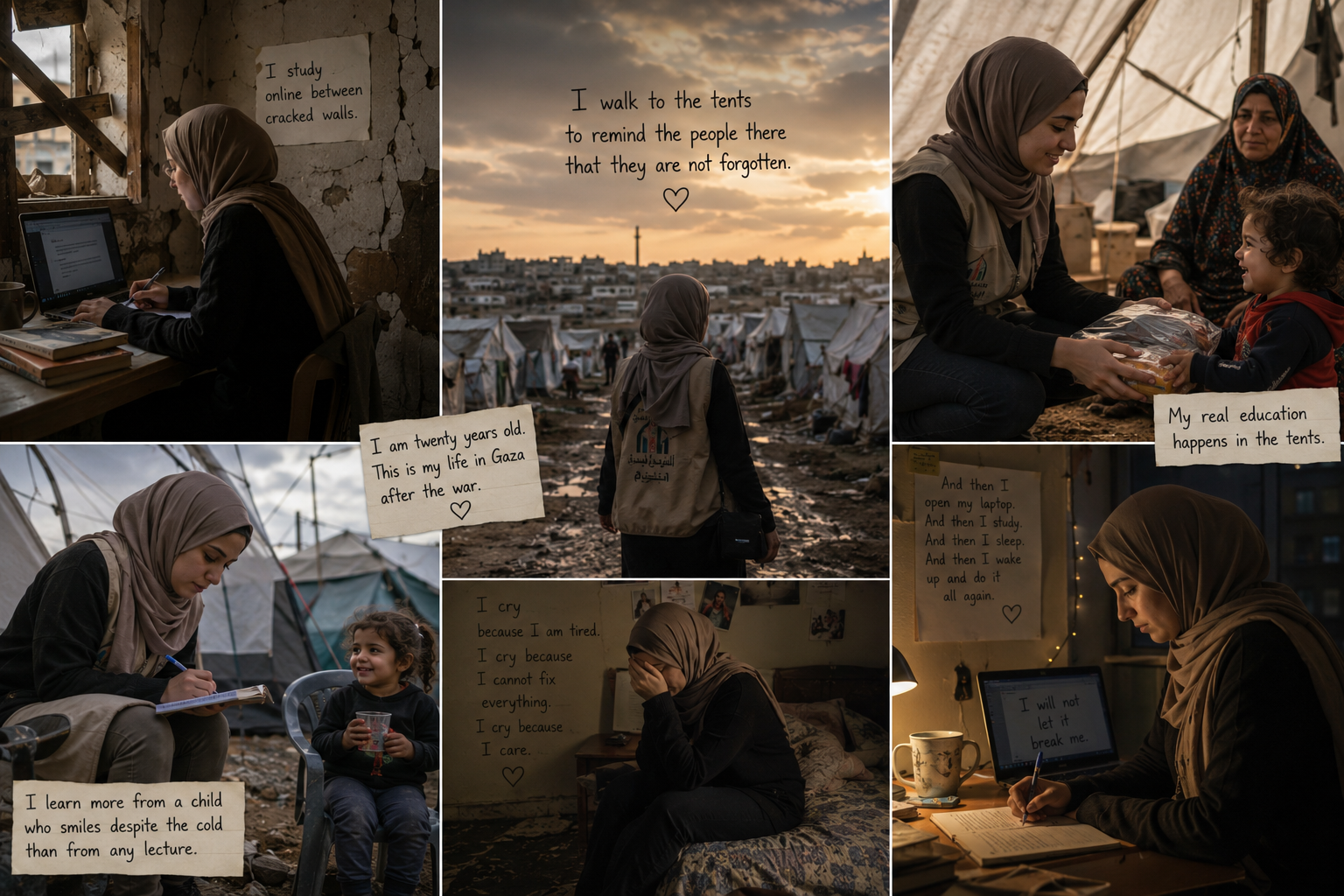
I study online in this damaged house, sitting at a desk near the least broken wall, hoping the internet signal will last through my lecture. Sometimes the electricity cuts and I lose my work. Sometimes I hear a loud noise outside and I freeze, remembering. But I open my laptop again. I type my assignments again. I am twenty years old and I am still a student, even when my classroom is a damaged room in a damaged home.
But my house is not the whole story.
After my online classes end, I close my laptop and I leave. I walk away from my cracked walls and my leaking ceiling, and I go to the tents. The camps are not far, but every step feels heavier. The tents are everywhere now, row after row of grey fabric flapping in the wind. This is where I do my charity work. This is my fieldwork.
The hardest days are when I come home. I leave the tents behind, but I never really leave them. I walk back to my damaged house, unlock the door that does not close properly, and step over the broken tiles in the hallway. My house feels like a palace compared to the tents, and that thought breaks my heart.
I have a door. I have walls, even if they are cracked. I have a bed, even if the ceiling above it is stained with rain. And the people in the tents have nothing but thin fabric between them and the sky.
I sit on my bed at night and I cry. I cry because I am tired. I cry because I held a baby today whose mother has no milk to feed her. I cry because an old woman in a tent asked me if I thought she would ever sleep in a real room again, and I did not know what to say.
I am only twenty. I should be worrying about exams and university and stupid fights with my friends. Instead, I worry about whether the family in the third tent got their food parcel today.
Balancing both worlds is tearing me apart in the most beautiful way. In the morning, I am a student inside my damaged house, typing essays and attending Zoom lectures. In the afternoon, I am a volunteer walking through mud between rows of tents I answer discussion posts for my online class while sitting on a plastic chair outside someone’s tent.
I submit my homework late sometimes because I was too busy helping a family secure their basic needs before the day ends . My professors do not always understand. But I cannot explain to them that my classroom is a damaged house and my real education happens in the tents.
I learn more from a mother who lost everything and still offers me tea than from any textbook. I learn more from a child who smiles despite the cold than from any lecture.
Sometimes I look at my damaged house and I feel guilty. Why do I have walls when they have fabric? Why do I have a door that locks when their door is just a flap that blows open?
But then I remember that guilt does not help anyone. What helps is showing up. What helps is carrying one more bag, visiting one more tent, holding one more hand.
I am twenty years old. I live in a house that was broken by war. I study online between cracked walls. And every afternoon, I walk to the tents to remind the people there that they are not forgotten.
I come home with mud on my shoes and exhaustion in my bones, and I sit in my damaged room and I cry. And then I open my laptop and I study. And then I sleep. And then I wake up and do it all again.
This is my life in Gaza after the war.
It is not the life I dreamed of.
But it is mine, and I will not let it break me.
بين الجدران المتشققة والخيام
لم أتخيل يومًا أن يبدو عامي العشرون هكذا.
أعيش في منزل متضرر، لا في خيمة. ما زالت لغرفتي الجدران نفسها التي كبرت بينها، لكن الشقوق الآن تمتد عبرها كأنها أنهار رفيعة. إحدى النوافذ أُغلقت بالألواح الخشبية، وسقف المطبخ يتسرب منه المطر كلما هطلت السماء. لكنه ما زال سقفًا، وأنا ممتنة لذلك.
كل صباح أستيقظ في سريري، تحت سقف كاد أن يسقط فوقنا، وأقول لنفسي إن هذا البيت أنقذ حياتي. هو مكسور، وأنا أيضًا، ومع ذلك ما زلنا واقفين معًا بطريقة ما.
أدرس عبر الإنترنت داخل هذا البيت المتضرر، أجلس إلى مكتب قرب أقل الجدران تضررًا، وأتمنى أن تبقى إشارة الإنترنت حتى تنتهي محاضرتي. أحيانًا تنقطع الكهرباء فأفقد عملي. وأحيانًا أسمع صوتًا مرتفعًا في الخارج فأتجمد في مكاني، أتذكر كل شيء. لكنني أفتح حاسوبي من جديد. أكتب واجباتي مرة أخرى. أبلغ العشرين من عمري وما زلت طالبة، حتى وإن كان فصلي الدراسي مجرد غرفة متضررة داخل بيت متضرر.
لكن بيتي ليس القصة كلها.
بعد أن تنتهي محاضراتي الإلكترونية، أغلق حاسوبي وأخرج. أبتعد عن جدراني المتشققة وسقفي المتسرب، وأذهب إلى الخيام. المخيمات ليست بعيدة، لكن كل خطوة نحوها تبدو أثقل من التي قبلها. الخيام في كل مكان الآن، صفوف طويلة من القماش الرمادي ترفرف مع الريح. هنا أقوم بعملي التطوعي. هنا ميداني الحقيقي.
أصعب الأيام هي تلك التي أعود فيها إلى البيت. أترك الخيام خلفي، لكنني في الحقيقة لا أتركها أبدًا. أعود إلى منزلي المتضرر، أفتح الباب الذي لم يعد يُغلق جيدًا، وأتجاوز البلاط المكسور في الممر. يبدو منزلي كالقصر مقارنة بالخيام، وهذه الفكرة تكسر قلبي.
لدي باب. لدي جدران، حتى وإن كانت متشققة. لدي سرير، حتى وإن كان السقف فوقه ملطخًا بمياه المطر. أما الناس في الخيام، فلا يملكون سوى قطعة قماش رقيقة تفصلهم عن السماء.
أجلس على سريري ليلًا وأبكي. أبكي لأنني متعبة. أبكي لأنني حملت اليوم طفلًا لا تملك أمه حليبًا تطعمه إياه. أبكي لأن امرأة مسنة في خيمة سألتني إن كنت أظن أنها ستنام يومًا في غرفة حقيقية مرة أخرى، ولم أعرف ماذا أقول لها.
أنا في العشرين فقط. كان ينبغي أن أقلق بشأن الامتحانات والجامعة والخلافات السخيفة مع أصدقائي. بدلًا من ذلك، أقلق بشأن ما إذا كانت العائلة في الخيمة الثالثة قد حصلت على طرد الطعام اليوم.
الموازنة بين هذين العالمين تمزقني بأجمل طريقة ممكنة. في الصباح أكون طالبة داخل بيتي المتضرر، أكتب المقالات وأحضر محاضرات الزوم. وفي المساء أكون متطوعة أمشي وسط الطين بين صفوف الخيام. أحيانًا أجيب على مشاركات صفّي الدراسي وأنا جالسة على كرسي بلاستيكي خارج خيمة أحدهم.
أحيانًا أسلم واجباتي متأخرة لأنني كنت مشغولة جدًا بمساعدة عائلة على تأمين احتياجاتها الأساسية قبل نهاية اليوم. أساتذتي لا يفهمون دائمًا. لكنني لا أستطيع أن أشرح لهم أن فصلي الدراسي هو منزل متضرر، وأن تعليمي الحقيقي يحدث في الخيام.
أتعلم من أم فقدت كل شيء وما زالت تقدم لي الشاي أكثر مما أتعلم من أي كتاب. وأتعلم من طفل يبتسم رغم البرد أكثر مما أتعلم من أي محاضرة.
أحيانًا أنظر إلى منزلي المتضرر وأشعر بالذنب. لماذا لدي جدران بينما لديهم قماش؟ لماذا لدي باب يُغلق بينما بابهم مجرد قطعة تُفتح مع الريح؟
لكنني أتذكر أن الشعور بالذنب لا يساعد أحدًا. ما يساعد هو أن تحضر. أن تحمل كيسًا إضافيًا. أن تزور خيمة أخرى. أن تمسك يدًا أخرى.
أنا أبلغ العشرين من عمري. أعيش في منزل كسرته الحرب. أدرس عبر الإنترنت بين الجدران المتشققة. وكل مساء أمشي إلى الخيام لأذكر الناس هناك أنهم ليسوا منسيين.
أعود إلى البيت والطين على حذائي، والإرهاق في عظامي، فأجلس في غرفتي المتضررة وأبكي. ثم أفتح حاسوبي وأدرس. ثم أنام. ثم أستيقظ لأفعل كل ذلك مرة أخرى.
هذه هي حياتي في غزة بعد الحرب.
ليست الحياة التي حلمت بها.
لكنها حياتي، ولن أسمح لها أن تكسرني

