This quote from the great Palestinian and American academic, literary critic, and political activist Edward Said reminds me of many people, intellectuals and others, whose silence surrounding the ongoing Israeli-executed genocide in Gaza is complicity. What he advocates is an uncompromising position of moral clarity and commitment that I embraced as a graduate student, one that created occasional conflict with the “intellectuals” who were my professors and mentors back in the day. Not taking a position, not appearing “too political,” and rejecting allyship in any shape or form is still a taking a political position, albeit a regressive one.
On a personal note, I felt compelled to reach out to Prof. Said via email in the years leading up to his death in 2003 at the age of 67. There are two main reasons why I earned a Ph.D. but chose not to work in academia: 1) my entrepreneurial nature, and 2) this one. I’ve never looked back.
MAA
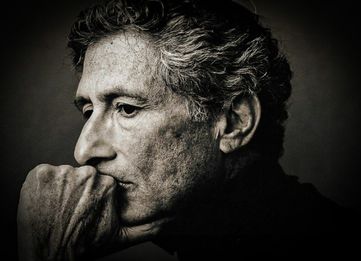
Nothing in my view is more reprehensible than those habits of mind in the intellectual that induce avoidance, that characteristic turning away from a difficult and principled position, which you know to be the right one, but which you decide not to take. You do not want to appear too political; you are afraid of seeming controversial; you want to keep a reputation for being balanced, objective, moderate; your hope is to be asked back, to consult, to be on a board or prestigious committee, and so to remain within the responsible mainstream; someday you hope to get an honorary degree, a big prize, perhaps even an ambassadorship. For an intellectual these habits of mind are corrupting par excellence. If anything can denature, neutralize, and finally kill a passionate intellectual life it is the internalization of such habits. Personally I have encountered them in one of the toughest of all contemporary issues, Palestine, where fear of speaking out about one of the greatest injustices in modern history has hobbled, blinkered, muzzled many who know the truth and are in a position to serve it. For despite the abuse and vilification that any outspoken supporter of Palestinian rights and self-determination earns for him or herself, the truth deserves to be spoken, represented by an unafraid and compassionate intellectual.
Edward Said, Representations of the Intellectual (1994)
This quote by C. Wright Mills (coincidentally, a distant paternal cousin) on the responsibility of the intellectual, complements Said’s:
As a type of social man, the intellectual does not have any one political direction, but the work of any man of knowledge, if he is the genuine article, does have a distinct kind of political relevance: his politics, in the first instance, are the politics of truth, for his job is the maintenance of an adequate definition of reality. In so far as he is politically adroit, the main tenet of this politics is to find out as much of the truth as he can, and to tell it to the right people, at the right time, and in the right way. Or, stated negatively: to deny publicly what he knows to be false, whenever it appears in the assertions of no matter whom … The intellectual ought to be the moral conscience of his society at least with reference to the value of truth, for in the defining instance, that is his politics. And he ought also to be a man absorbed in the attempt to know what is real and unreal.
C. Wright Mills, On Knowledge and Power (1955)

