This is a repost of a Facebook post by the one and only, Michael Jochum, whose tagline is Not Just a Drummer: Reflections on Art, Politics, Dogs, and the Human Condition.
My response to the title of this post: May it be so.
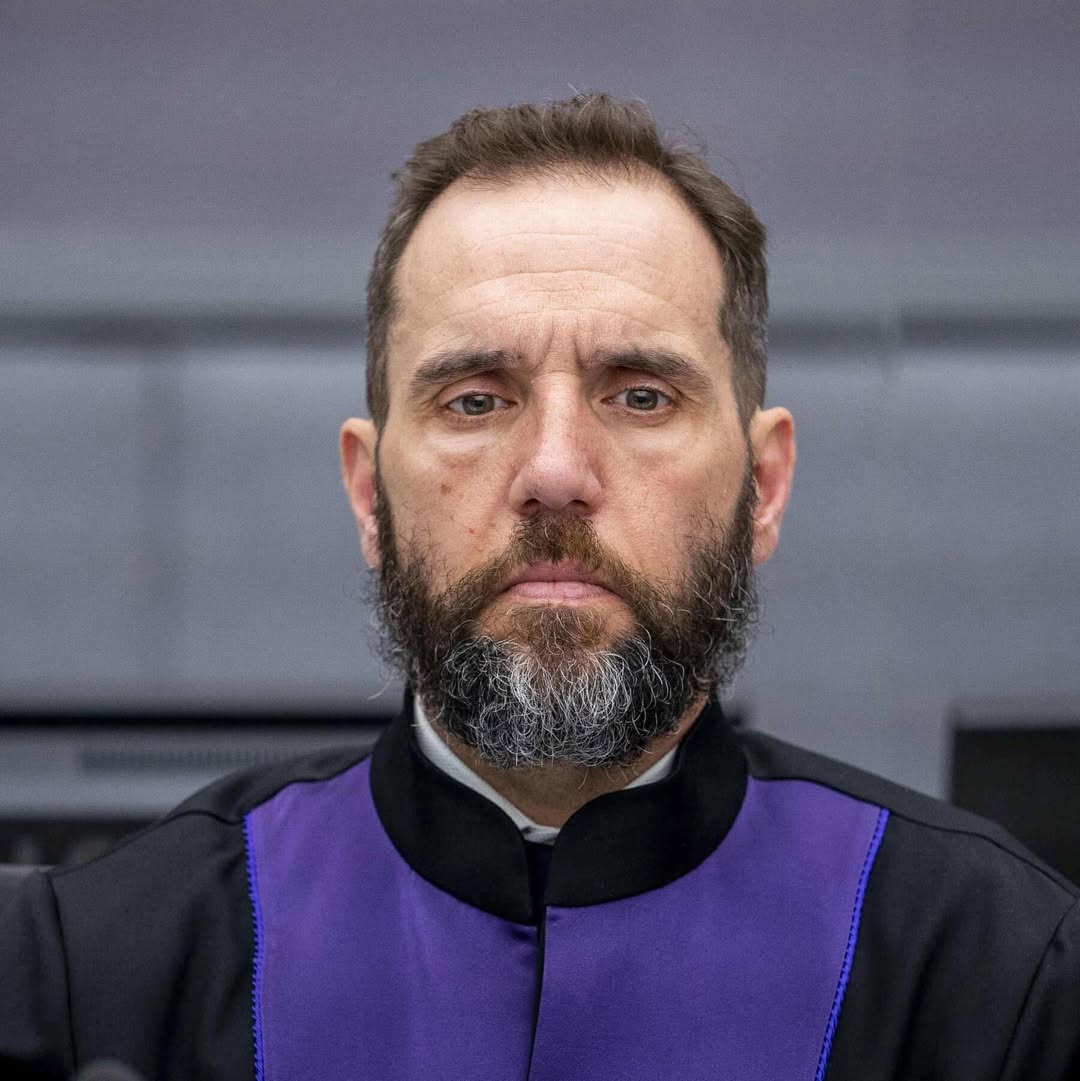
There are moments in history when the façade cracks and you see the structure underneath for what it really is. The release of Special Counsel Jack Smith’s congressional testimony was one of those moments. Beneath the careful legal language and the methodical presentation of evidence was a conclusion that should chill anyone who still believes in the Constitution: the former president of the United States engaged in a criminal scheme to overturn the lawful results of a democratic election. Not rhetoric. Not cable-news spin. Evidence gathered, reviewed, and presented by a federal prosecutor who spent years assembling the case. That alone would be enough to define a presidency in decline. But decline, in the case of Donald Trump, is never content to stay in one lane.
While the country is still grappling with the aftermath of a president who tried to cling to power after losing an election, we are now watching that same man drag the United States into a widening confrontation with Iran, a war that the administration refuses to call a war even as missiles fly, oil markets convulse, and American servicemen and women are placed in harm’s way. The Strait of Hormuz, the narrow artery through which roughly a fifth of the world’s oil supply flows, has become the geopolitical choke point every serious strategist warned about for decades. When it tightens, gasoline prices spike, shipping costs rise, inflation follows, and American families pay the bill. That is the mathematics of war. Every bomb dropped in the Persian Gulf eventually shows up as another dollar on the gas pump in Colorado, California, Texas, everywhere. The consequences of reckless leadership do not stay overseas. They come home.
Americans are beginning to notice.
Trump’s approval numbers are sliding again, and not gently. Poll after poll shows what should surprise no one paying attention: a majority of the country is exhausted by the chaos. Even outlets historically sympathetic to him have reported approval numbers hovering around the high thirties while roughly sixty percent of the country disapproves of his performance. Sixty percent. In political terms that is not a disagreement. That is a national verdict. The man who once promised a “new golden age” is now presiding over economic anxiety, global instability, and a war that appears to have no coherent exit strategy.
You could see the public mood shift long before the polls caught up. Millions of Americans poured into the streets on October 18 during the “No Kings” demonstrations, one of the largest protest mobilizations in modern American history. People of every age and background showing up not because a party told them to, but because they recognized something deeply unhealthy in the direction of the country. That instinct was reinforced weeks later at the ballot box, when Trump-aligned candidates were rejected across key races in November elections that functioned, in effect, as a referendum on the administration’s behavior. Americans may disagree on taxes, regulations, and policy details, but a growing supermajority seems united in one conclusion: governing through grievance, vengeance, and spectacle is not leadership.
What we are witnessing now is not strength. It is deterioration. A presidency fueled by ego and paranoia slowly collapsing under the weight of its own contradictions. A man who once attempted to overturn an election now asking the country to trust his judgment on war. A leader who cannot tell the truth about something as simple as crowd sizes now expecting Americans to believe that military escalation in the Middle East will somehow produce peace. It would be funny if the consequences were not so deadly serious.
Trump has spent a decade marketing himself as the strongman who alone could fix everything. The master dealmaker. The fearless negotiator. The man who would end wars rather than start them. Yet here we are, allies alienated, adversaries emboldened, oil markets rattled, missiles flying, and American troops once again standing in the blast radius of a conflict that appears to have been conceived somewhere between a cable-news segment and a late-night impulse.
That is what decline looks like. Not the theatrical theatrics of rallies or the bombast of social media posts, but the slow erosion of competence and judgment. The inability to distinguish between performance and governance. The refusal to accept limits. The insistence that every crisis is someone else’s fault, Biden, Obama, the media, the courts, the deep state, take your pick, while the wreckage piles up in real time.
Americans are not blind. They can see the gas prices. They can see the instability abroad. They can see a president who seems less interested in governing than in performing the role of emperor in a country that was explicitly designed to have no kings. And that is why the approval numbers keep falling. Because beneath the noise, beneath the propaganda, beneath the endless stream of grievances, a simple realization is spreading across the country:
This is not leadership. This is decay.
And the longer it continues, the more expensive, and more dangerous, the consequences will become for everyone who has to live in the country this man is supposed to be leading.
—Michael Jochum, Not Just a Drummer: Reflections on Art, Politics, Dogs, and the Human Condition
 An International Educator in Vietnam