
This image recently appeared in my LinkedIn feed. It highlights the Orwellian use of language in the existential battle between Zionists and anti-Zionists and corresponds to the Zionist propaganda framework, in particular, point #3. Criticism of Israel, a country whose rabid supporters declare to be beyond criticism (“I Stand with Israel”), is anti-Semitic, the all-purpose and one-size-fits-all condemnation. “War is peace, freedom is slavery, ignorance is strength.”
1) to someone who has only ever known impunity, accountability feels like persecution;
2) the stripping away of privilege feels like discrimination;
3) criticism of their racism feels like a racist attack on them;
4) holding them to the same standards as everyone else is an intolerable denial of their superiority; and
5) facts, truth, law, human rights norms, and anything else that contradicts their political ideology feels like a personal threat. This is how a racist political ideology morphs into a kind of mental illness-and a very dangerous one. (Craig Mokhiber)

Related to the above is how Zionists and their supporters defend the indefensible, a civilian population that is being slaughtered, injured, displaced, and starved, otherwise known as genocide and ethnic cleansing.
Here’s the Israeli Foreign Ministry’s predictable response to the Amnesty International report that perfectly illustrates the apple/banana image: “The Foreign Ministry blasts ‘the deplorable and fanatical organization Amnesty International’ for its report accusing Israel of genocide in the Gaza Strip. In a statement, the ministry calls it ‘a fabricated report that is entirely false and based on lies.'” This also perfectly illustrates points #1, #2, #4, and #5 of the Zionist framework.
Another issue is the mainstream media’s tendency to give Israel a pass through the selective use of words. For example, the New York Times instructed its journalists covering Israel’s war on the civilian population of Gaza to restrict the use of the terms “genocide” and “ethnic cleansing” and not to use the phrase “occupied territory” when writing about Palestinian land, according to an internal memo obtained by The Intercept. The end result is watered-down coverage that limits Israel’s liability and responsibility.
Another example is this 6.11.24 Guardian article: Palestinians will not be allowed to return to homes in northern Gaza, says IDF. Why are they not allowed to return to their homes in northern Gaza? Just spell it out rather than dancing around the key issue, which is ethnic cleansing.

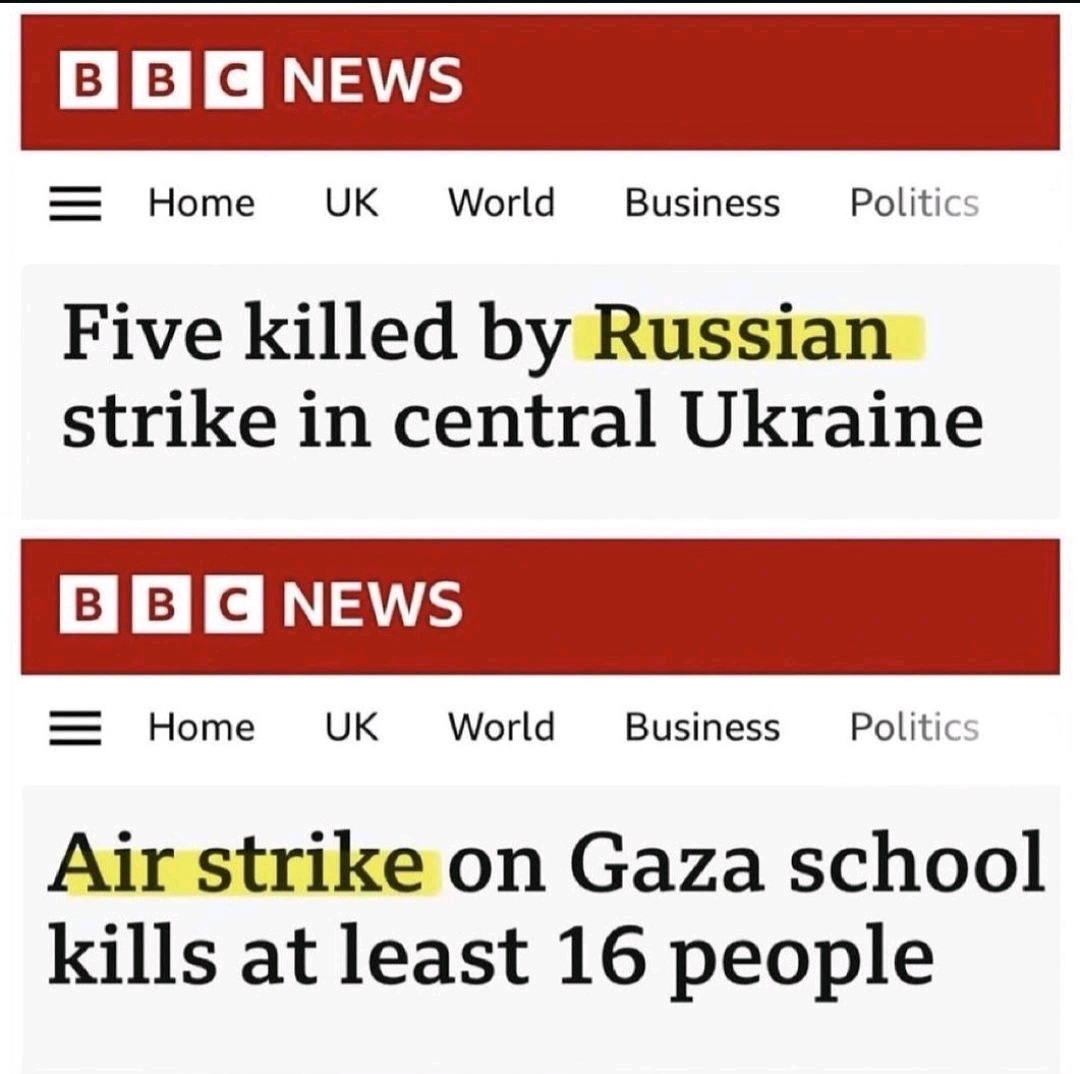
Like other representatives of the mainstream media, the BBC is also guilty of bias. Here are two headlines from 3 June 2024 and 6 July 2024. One of my connections on LinkedIn commented that the BBC hates Palestinians. It’s that so much as it gives Israel a pass by not stating explicitly that Israel’s IDF authorized the air strike on the school in Gaza while it makes it crystal clear who’s responsible for the strike in central Ukraine. This is another textbook example of media bias for journalism students.
Here’s one from MSNBC on 10 July 2024. The 186,000 deaths are the result of the “Israel-Hamas war” not genocide. How unfortunate. Innocent victims of “war.” Shit happens, as the bumper sticker says.


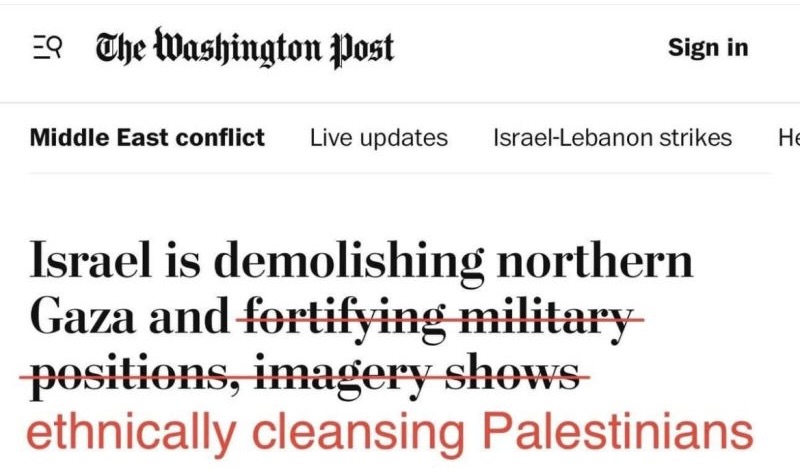
One final example closer to home. The editor’s introduction to my 14.11.24 article The glaring hypocrisy of establishment US international education stated the following: “Mark Ashwill reflects on the conspicuous silence from US colleagues in the international education sector on the humanitarian crisis in the Middle East.” Let’s not mince words. The “humanitarian crisis” is the direct result of genocide and ethnic cleansing.
 An International Educator in Vietnam
Pretty muddled job. I tried to follow. Israel has cost the US an important election.
Among other reasons. The Dems underestimated how many of their supporters are opposed to genocide and ethnic cleansing.