There is no genuine hope that’s not wrestling with despair. -Dr. Cornel West on fascism, spirituality and the enduring struggle for freedom
Here are two posts by Michael Jochum and Yahya Delair that reflect the spirit of Cornel West’s quote followed by information and practical trips about sustaining ourselves as individuals and as a groups during these difficult times.
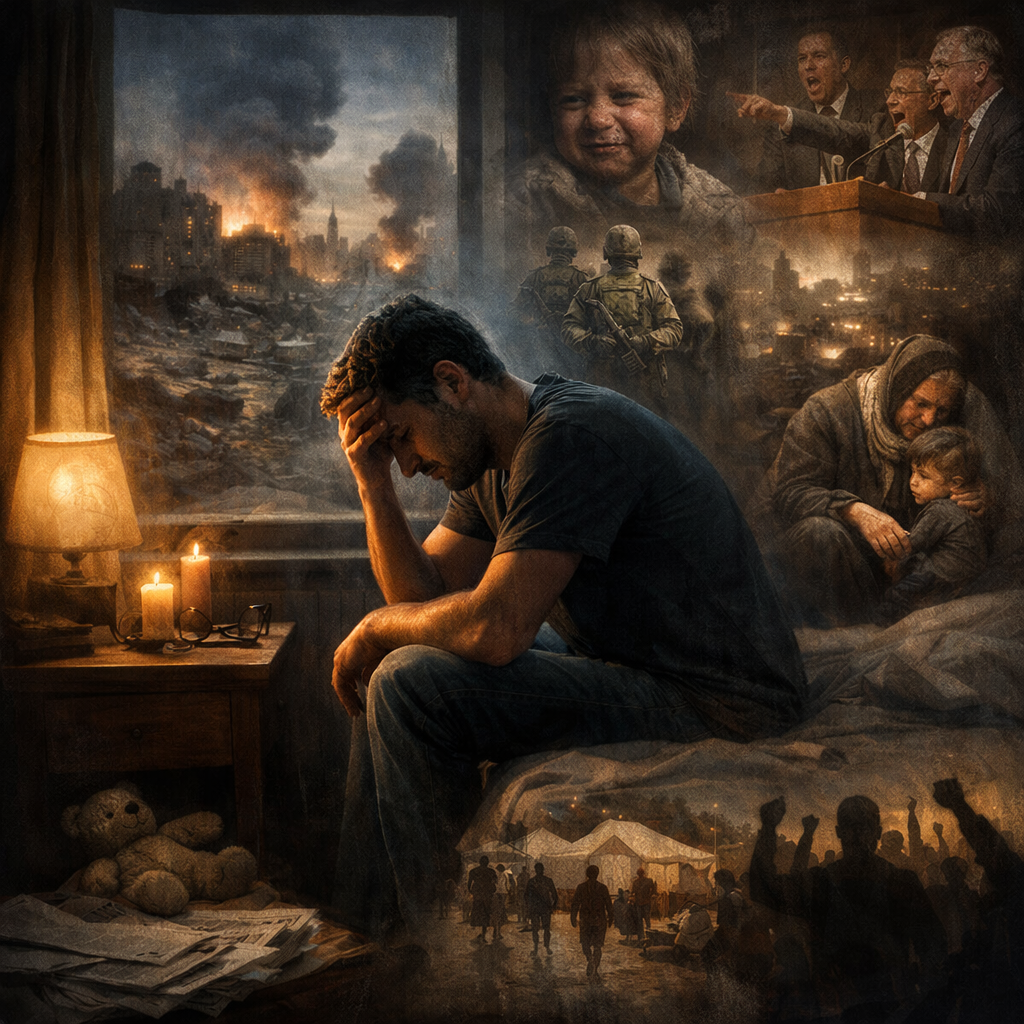
There is a terrible tension in being an informed human being. The more honestly you look at the world, the more clearly you see its cruelty, its indifference, its staggering lack of empathy. It would be easier, psychologically, emotionally, to look away. To scroll past the headlines, to pretend the suffering of others is distant, abstract, someone else’s burden. But conscience doesn’t work that way. Once you see the truth, you can’t unsee it. Yes, it can make you sad. Sometimes unbearably so. When children are killed in wars started by reckless men, when cruelty becomes political currency, when leaders deliberately inflame anger, resentment, and bitterness to hold onto power, it can feel overwhelming. It can make you wonder how a society that once spoke so proudly about liberty and compassion could drift so far toward indifference.
But silence is not the cure for that sadness. Silence is what allows cruelty to grow.
The real balance isn’t between knowing and protecting your feelings. The balance is between carrying the weight of truth and refusing to let that weight crush your humanity. Because if people with conscience stop speaking, stop caring, stop insisting on empathy and decency, then the most callous voices are the only ones left in the room.
And that is exactly what those who profit from anger and division want. The sadness you feel is not weakness. It is evidence that your humanity is still intact in a world that often tries to strip it away. The challenge is to let that sadness sharpen your moral clarity rather than paralyze you. To let it remind you why compassion matters, why truth matters, why speaking honestly, even when it hurts, matters.
Because history has never been changed by the comfortable. It has been changed by people who were willing to face painful truths and say them out loud anyway.
—Michael Jochum, Not Just a Drummer: Reflections on Art, Politics, Dogs, and the Human Condition.
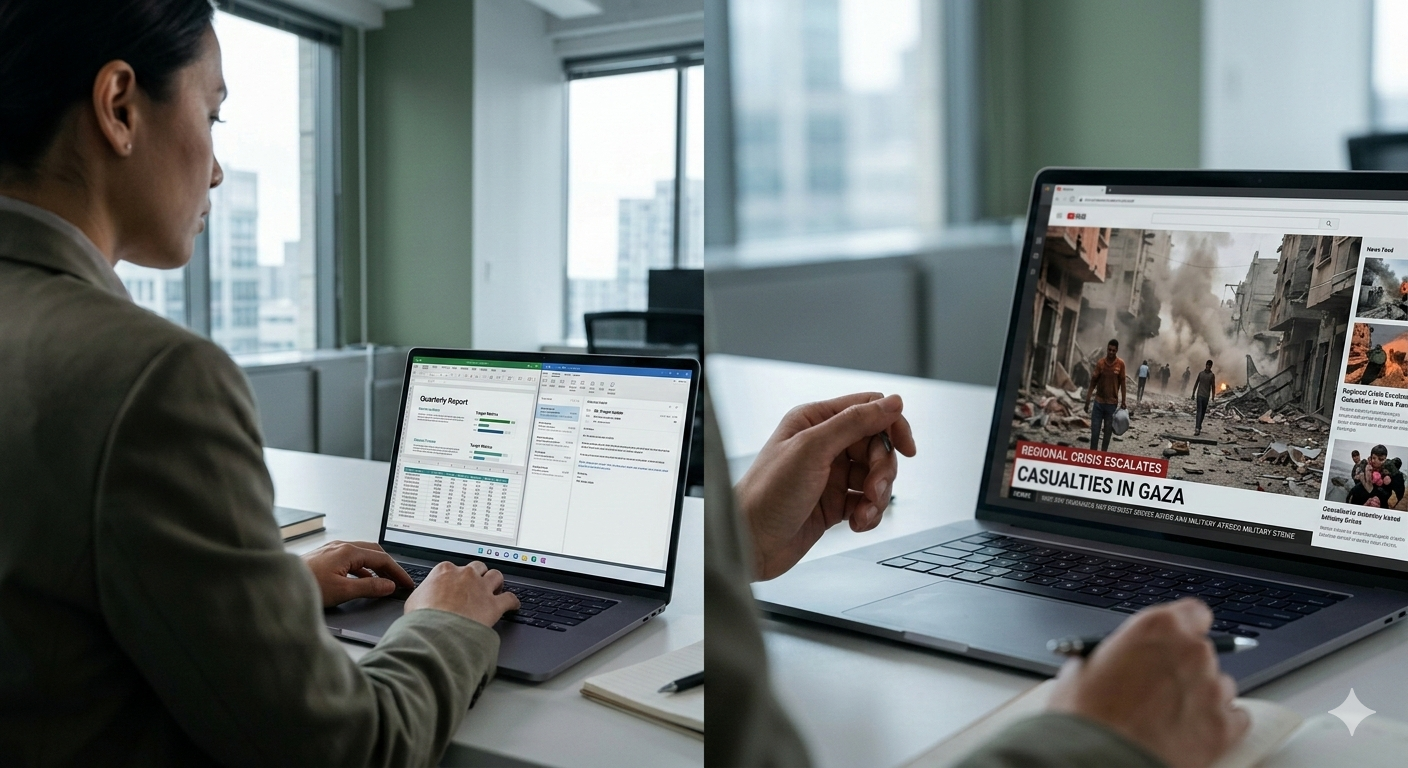
One of my LinkedIn contacts, Yahya Delair, who’s a mental health consultant and associate lecturer at the University of Exeter, shared a tangential point for those of us who have a conscience and therefore the balancing act of living our daily lives and thinking about the genocide in Gaza and the victims of state-sponsored terrorism and cruelty elsewhere. This is exactly how I and countless others around the world feel.
There’s a strange duality to this moment. You log into work, Calendar full, Targets to hit. Polished conversations about strategy and growth.
And then you glance at your phone.
Gaza, Children under rubble, Hospitals bombed, Talk of escalation across a region already burning. American and Israeli military power redrawing the map in real time.
Then it’s back to: “Hope you had a good weekend.”
The dissonance is sharp. You sit in meetings discussing marginal gains while watching mass death unfold in high definition. You contribute thoughtfully to conversations that, in another time, would have felt important but now feel faintly unreal.
For many of us, professionalism right now is a mask. Not because we lack resilience.
But because there is something profoundly unnatural about pretending this is a stable world.
You learn to compartmentalize, To mute the footage, To soften your tone, To perform normality.
Meanwhile half the Middle East feels one political miscalculation away from full-scale war and the language of “security” and “defence” keeps everything sounding procedural, almost administrative.
It’s a strange reality.
Grief in one tab.
Quarterly projections in another.
Global instability on the news.
“Circling back” in the inbox.
This is what it feels like to live through visible catastrophe while being expected to function as though the ground isn’t shifting beneath us.
Postscript: This excellent article provides information and practical trips for sustaining ourselves as individuals and as a groups during these difficult times: Mental Health in the Palestine Solidarity Movement: Supporting Each Other.
 An International Educator in Vietnam