This spot-on essay by Hussein Hallak describes exactly how many of us feel. Thanks to Noam Chomsky for the perspective and to Hussein Hallak for the insights. Don’t miss his advice at the end, Building for the Long Term.
Here’s one of my favorite Chomsky quotes: You can’t look yourself in the mirror if you don’t do it. I’ve felt this way since I was a university student. What about you?
Oct 24, 2025
In a world teetering on the edge, ‘better’ is not nothing. It’s everything. And it’s worth fighting for.
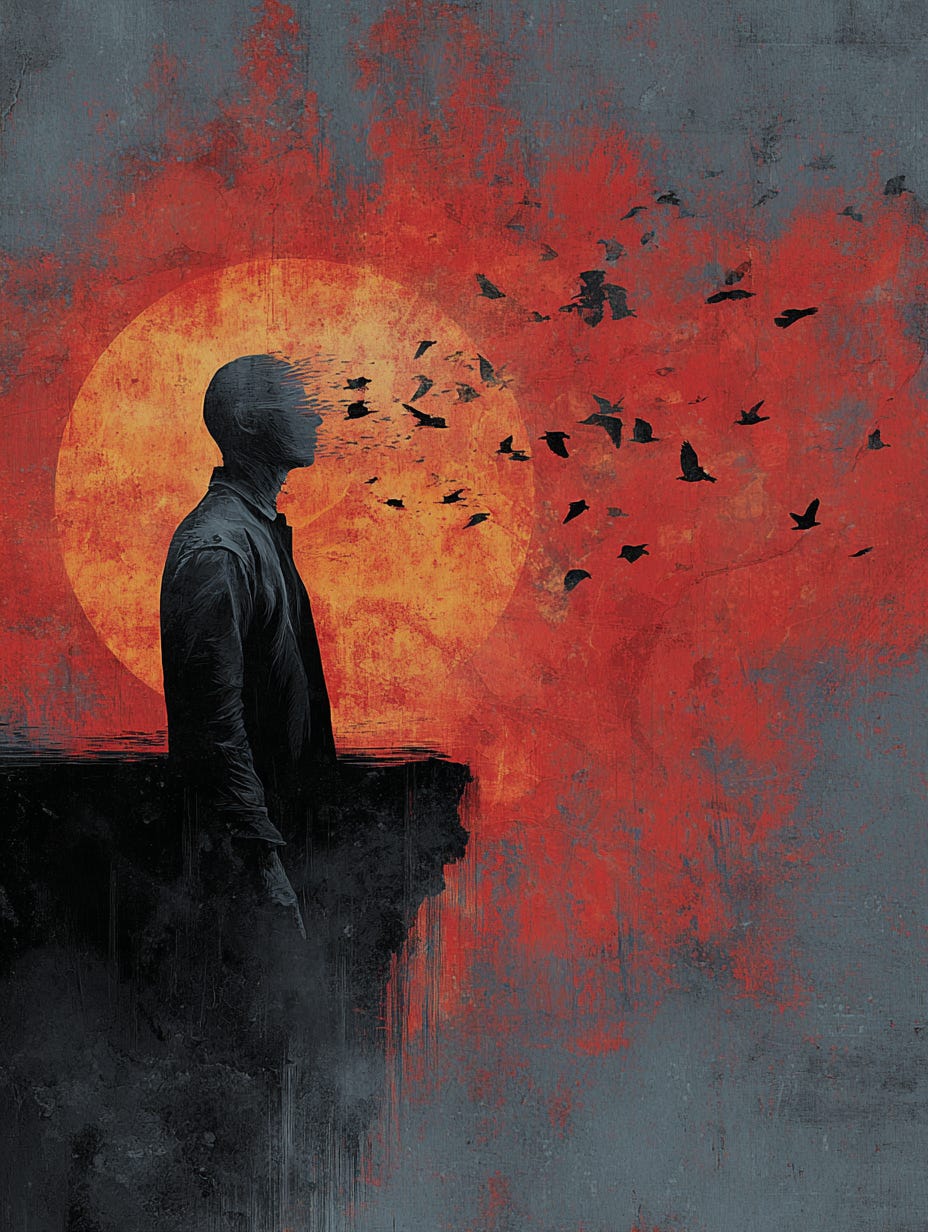
I’ve been battling this idea of ‘Hope’ in my head, in my writing, and in conversations with my wife. The key question is, do I keep fighting, or do I give up?
It’s nice to feel righteous, justified, on the right side of history. But there is a part of me that wants to see progress, to feel a sense of accomplishment.
And I tell you, every time I’m on a high because an article of mine gets more views than usual, and I’m getting interesting comments, feeling a sense of community, that there are more of us out there who are not blind to what’s going on. Every time we protest by the millions, it builds hope and a feeling that something is possible, that we might win.
Then, the current administration does something even more horrible, and somehow, they manage to destroy, physically or metaphorically, all hope. And the worst part is there are these seemingly professional, smart people, who crawl out of their offices and comfortable lives to say the dumbest shit ever.
The media is usually silent, or busy with the theater. Very few people are paying attention.
Somehow that makes me lose hope in humanity, and feel that we are cooked.
It feels like punching a concrete wall. Maybe my knuckles are hardening, less bloody, and less painful, but the wall is still there, immovable, uncaring, impossible to change.
Today, while listening to Understanding Power by Noam Chomsky, I came across a section about Hope and the early peace movement.
I like listening to Chomsky for three reasons: he has a no-BS view of history based in reality and declassified documents; you quickly realize that while things were different, the mechanisms of power are the same; and it’s far more informative and empowering for today’s world than I thought.
This was one of those instances where all three reasons were present. The chapter starts with a man asking him about this very tension:
Question: There are two contradictory strains that I can identify in your work on the question of Hope. On the one hand, you speak about the efforts organizing on behalf of Central America and East Timor, and other activist causes… But on the other hand, I hear you always talking about the destruction the U.S. and other powers are causing… I’m wondering, how do you deal with that tension personally? Do you just keep doing what you do, because it’s the right thing to do? Or do you actually have a sense of hope in it?
Chomsky’s answer is a masterclass in intellectual humility and pragmatism:
Chomsky: Do I personally? Well, first of all, I don’t think that matters very much, because that’s only a reflection of my personality and mood, and who gives a damn… But if I try to be realistic about it… you know, 25 years ago, I did it because I thought you just have to do it.
I had to stop and internalize that sentence: I did it because I thought you just have to do it.
It didn’t matter if there was hope or not. He did it because he had to. This captures the feeling I have when I’m writing these articles, when I protest, argue, and fight against this wave of fascism in any way I know how. Because I have to do it. I look at the subscriber numbers, the engagement, I face the shadow banning, and I still do it. As Chomsky puts it:
You can’t look yourself in the mirror if you don’t do it.
That’s the core of it. We are principled, humane, caring people who want to live in a better world. We were okay with the slow progress of change, but they have shown us their teeth. They have made us the enemy.
And I don’t just mean radical leftists, I mean normal, everyday people. They are coming for everything we have, and I don’t just mean money. They want our lives and livelihoods. They want us to live in poverty, in bondage, and say thank you.
We couldn’t stand for this. So you see a sea of change. Everyone is active, waking up, taking action, because we have to. Because we must.
Chomsky admits he felt the same despair:
I didn’t think there was any hope at all at the time. I mean, when I got involved in the anti-Vietnam War movement, it seemed to me impossible that it would ever have any effect… In fact, the few of us who got involved in the early ‘60s confidently expected that the only consequence of what we were doing would be that we’d spend years and years in jail and destroy our lives.
That’s how I felt a year ago, screaming about the dangers of the current political climate while people told me I was being divisive. I felt alone. But then things began to shift. It may be the algorithm in my feed, but I think there is far more to it.
More people are speaking up, getting involved.
My wife keeps telling me, “Please don’t get us in trouble.” As Syrians, we are all too familiar with the ruthlessness of an oppressive regime. We see the signs in the American regime, which is why I had to do something, to speak up.
Chomsky lived this. He explains that only two things kept him out of prison: the FBI’s incompetence and the Tet Offensive in 1968, which shifted public opinion and government policy so profoundly that the state began to back off its prosecution of activists. He notes:
It was just impossible at that time to imagine that anything would come out of it. And that was wrong. A lot came out of it, not out of what I did, but out of what lots and lots of people were doing all over the country… Looking back, I think my evaluation of the hope was much too pessimistic. It was based on complete misunderstanding.
That’s a crucial point. We feel alone, like we are fighting this amorphous, immovable, gigantic problem. But we are not alone. There are more of us than them, and our collective power is something to be reckoned with.
If we didn’t matter, they wouldn’t be working so hard to quell the resistance.
Chomsky describes how, in a couple of years, the climate changed significantly. By the 1970s, the conversation had deepened from just opposing the war to wanting to fundamentally change the world, to challenging institutions and capitalism itself.
But he offers a warning:
The people with power… are watching all these things too… they can learn, they can see what didn’t work for the last time and do it better the next time… On our side, what happens is people forget it. It does take skills to organize… and those skills tend to get lost… Since we don’t have stable popular institutions, all these things that you kind of get in your bones after a while… do not become part of the common lore.
And there it is: the main reason it’s so hard to resist in America. The absence of a real opposition party, a co-opted media, a corporate sector interested only in profit. These are some of the hardest conditions to mount a resistance under, and still, we did.
This battle isn’t new. It’s a conflict that stretches back centuries. People trying to control their own lives, and people with power trying to stop them.
Until we dissolve the centers of private power and get popular control over the crucial decisions in our society, this battle will always go on.
From Despair to Duty
What Chomsky teaches us is that hope is not a feeling we wait for; it’s a byproduct of collective action.
He didn’t believe the anti-war movement would succeed, but he acted anyway because moral duty demanded it. And precisely because he and thousands of others acted without the certainty of hope, they created the conditions for hope to emerge.
The shift in consciousness he describes didn’t come from optimism; it came from sustained, principled resistance that gradually changed what people thought was possible.
I started writing this because I was losing hope. Every small victory seemed to be followed by a larger defeat. But engaging with Chomsky’s words has clarified something for me: I was looking for hope in the wrong place.
I was waiting to feel certain that we would win before I committed fully to the fight.
But certainty is a luxury we don’t have, and perhaps never did.
Chomsky expected to go to prison. The early anti-war activists expected to fail. They acted anyway. And because they did, they changed the world, not completely, not permanently, but significantly.
They made things better than they would have been.
Building for the Long Term
Chomsky’s warning about the absence of stable institutions is the critical challenge of our time. We are good at mobilizing for protests, at sharing outrage on social media. But are we building the community radio stations, the mutual aid networks, the independent media that can sustain resistance for decades?
The current administration will eventually end. But the forces that produced it will remain unless we build alternative structures of power and solidarity.
So here’s what I’m committing to, and what I ask you to consider:
First, keep doing the work.
Write, protest, organize, support, resist, not because you’re certain it will work, but because it’s the right thing to do. Because collective action creates the conditions for change.
Second, build for the long term.
Find your corner, as Chomsky says, but also connect your corner to others. Support independent media. Join or create local organizations. Invest in institutions that can outlast this moment.
Third, remember that they want us to feel hopeless.
The powerful benefit from our despair. Every time we act in solidarity, we prove them wrong. Every time we connect with others who see what we see, we weaken their narrative that we are alone.
I wrote earlier that resisting feels like punching a concrete wall, painful, futile, unchanging. But maybe that’s the wrong metaphor.
Maybe it’s more like water wearing away stone. Each of us, alone, is a single drop. But together, over time, we can reshape the landscape.
We may not live to see the canyon we carve, but we can feel the current pulling us forward, connecting us to everyone who has fought before and everyone who will fight after.
That’s not the hope of certainty. It’s the hope of solidarity. And as Chomsky says, the result is that “Things are better than they would have been if you hadn’t done it.”
In a world teetering on the edge, “better” is not nothing. It’s everything. And it’s worth fighting for.
 An International Educator in Vietnam