A 14.7.25 LinkedIn update from Hani Almadhoun, Senior Director of Philanthropy at UNRWA USA. His organization is one of those providing lifesaving food and medicine to the people of Gaza. Please consider donating to UNRWA USA and the Gaza Soup Kitchen, a nonprofit Hani founded with his brother Mahmoud, who was assassinated by an Israeli drone strike in November 2024. Hani, who is based in Washington, D.C., is in daily contact with family, friends, and staff in Gaza.
Take a moment out of your busy day to look at each photo, the children’s facial expressions, clothing, hands, and eyes. These are God’s children, our children. We must do everything in our power to stop the killing and give these children and everyone in Gaza a future.
Caption: Lunch is served to our special guests — those enduring unimaginable pain and suffering in Gaza. But with each passing day, there are fewer and fewer Palestinians left to witness these horrors, as the Israeli army continues its daily campaign of killing.
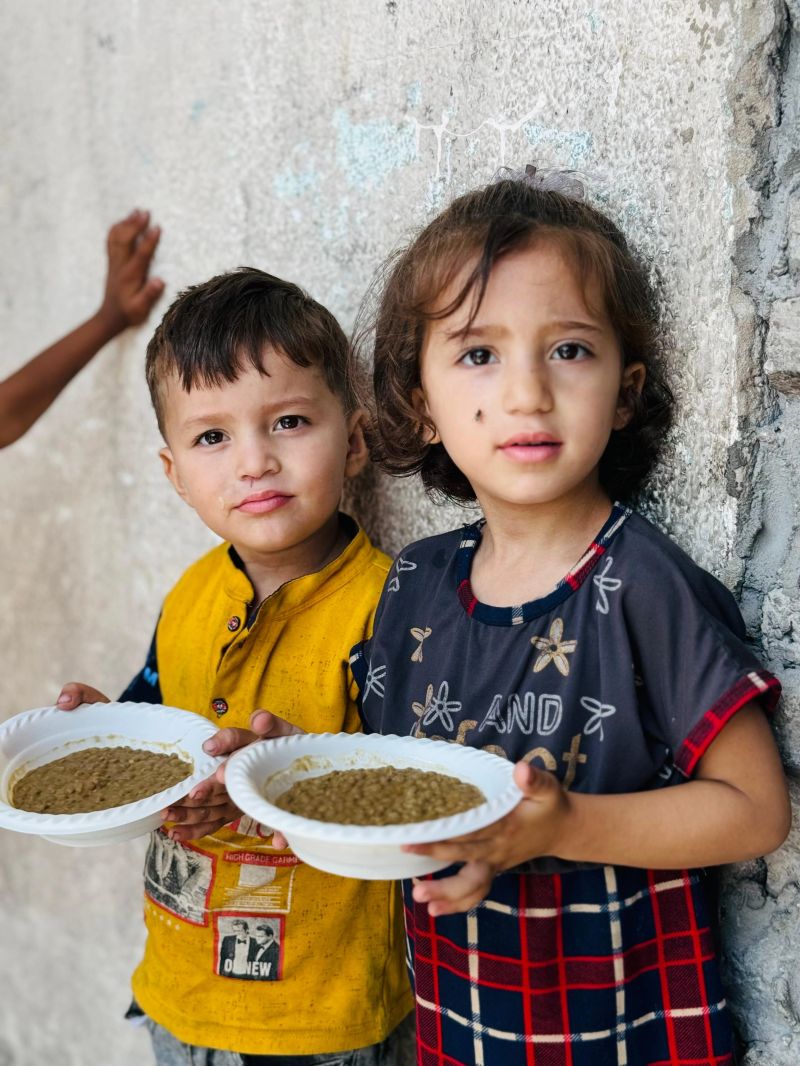

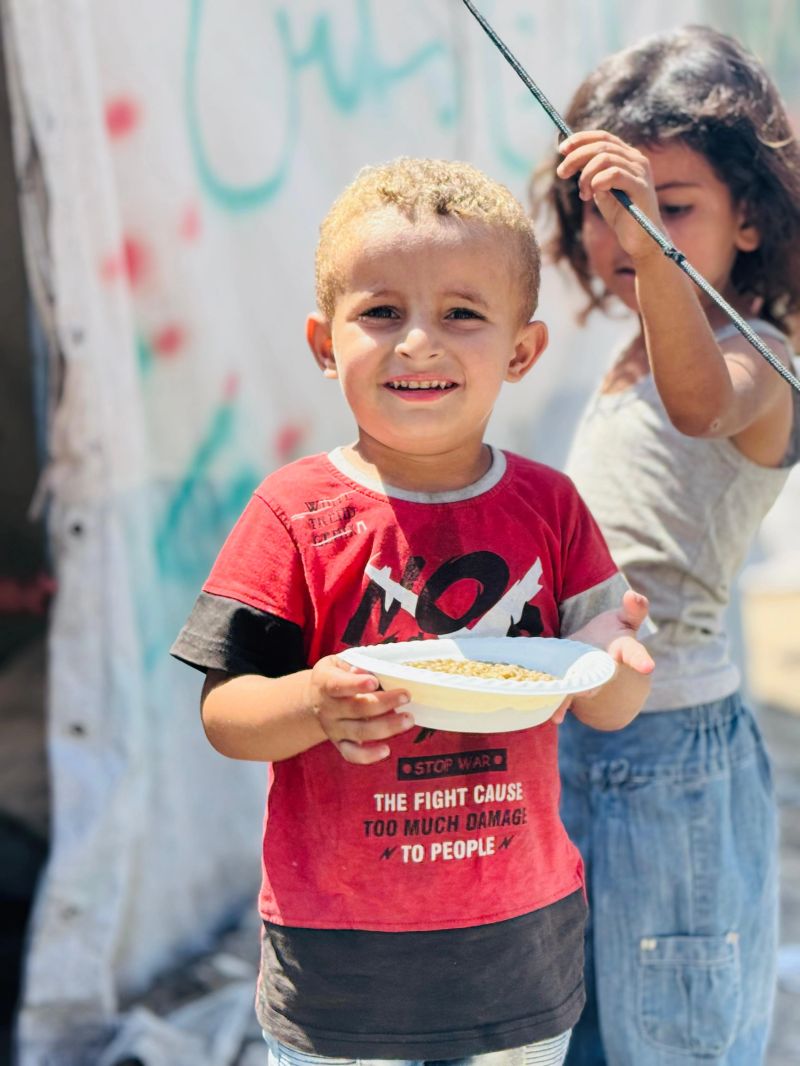

Here’s a Facebook post by Hani:
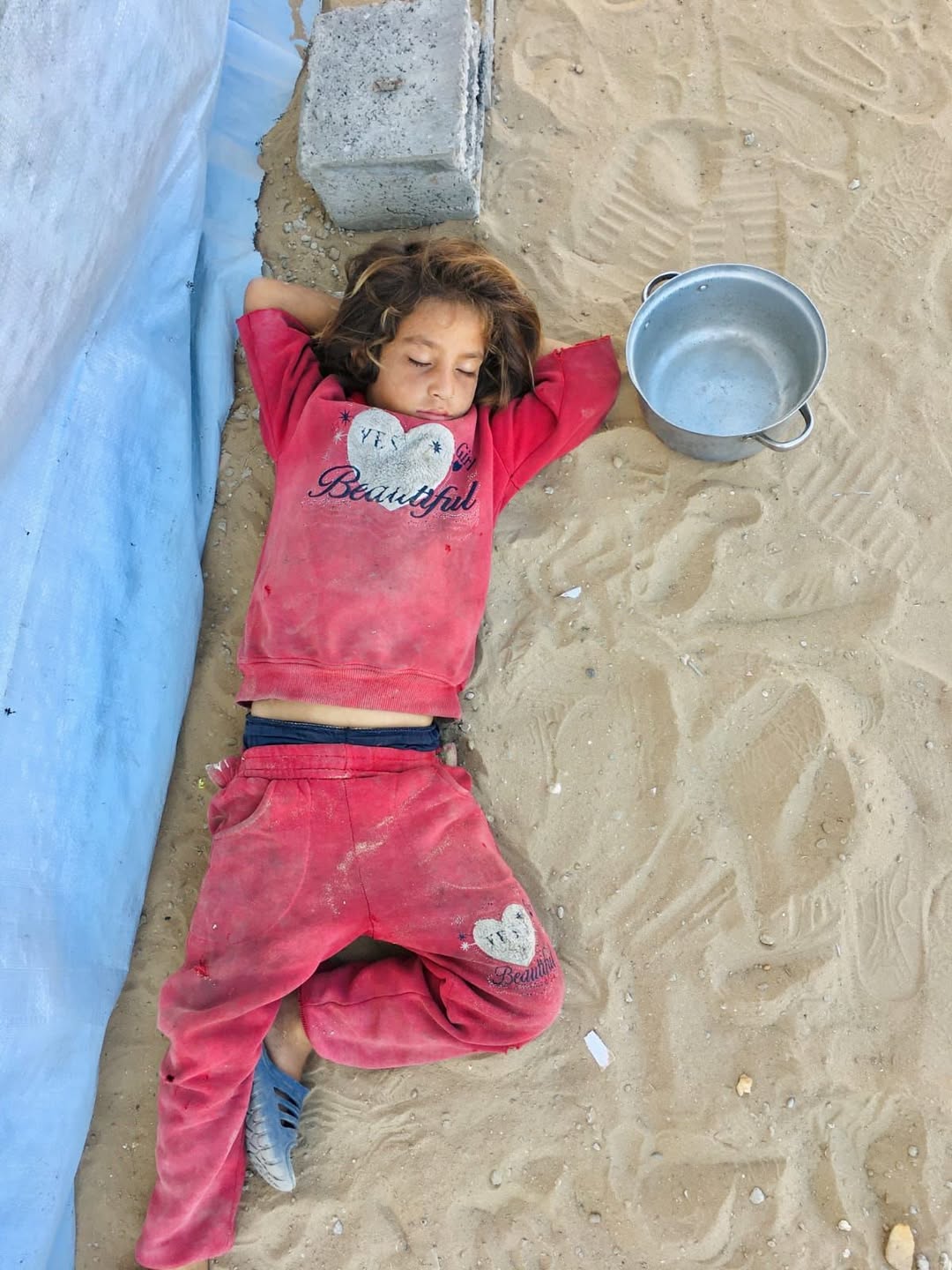
She came early — earlier than anyone else — carrying her empty pot and quiet hope. When the crew arrived, they found her curled up, fast asleep, worn out from the wait. It wasn’t just exhaustion from lack of sleep. It was hunger, the kind that seeps into your bones. In Gaza, even waiting for food takes everything you’ve got. This is what Israel’s blockade and war have done: turned mealtime into a battle of endurance for children who should only be worrying about play.
 An International Educator in Vietnam
Another heartbreaking story from Hani:
⚠️⚠️My dad shared this story with me today, and I haven’t been able to shake it.
A woman in one of the makeshift camps was seen running from tent to tent, frantic and out of breath. Her husband had slipped into a diabetic coma. She knew what he needed — just something sweet — a spoonful of sugar, a bite of halva, anything. But the war has emptied even the smallest comforts from Gaza’s cupboards.
No one had sugar. No halva. No dates. Nothing.
Even if someone did have sugar, it now costs nearly five dollars a spoonful — a price no one in that camp could afford. Not for a dying man. Not even for a child.
She returned to her tent empty-handed.
Her husband — a man in his late fifties — was gone.
Just like that.
Not from a missile or a bullet. But from something entirely treatable — if only they hadn’t starved Gaza of everything.
Who is responsible for this death?
Israel is.
And here’s the grim reality behind the slushies we handed out to children three days ago: they were sweetened with cough syrup. Because that’s the only sugar we could find. A kilo of sugar now costs $100. People are draining the syrup from canned pineapples just to sweeten their tea.
This is what it means to be under blockade and siege — where even sugar is out of reach, and dying from a diabetic coma becomes part of daily life.
A Facebook post by Hani:
The Last Moments of Chef Mahmoud
They tried to save him.
When Chef Mahmoud was hit, they couldn’t take him through the main road—too many bullets, too much fire. So the men who were with him found an alleyway and carried him through it, ducking sniper fire and praying the tank shelling wouldn’t hit too close. Every step toward the hospital was agony, but they didn’t stop. Not while he was still breathing.
They made it to the hospital. Barely.
What I only recently learned—what nurse Ahmad who was at Kamal Adwan Hospital shared with me—is what happened next.
Chef Mahmoud lifted his head. Just enough to see his feet.
Or what was left of them.
He looked once. Took it in. And then he let his head fall back.
And he was gone.
He didn’t cry out. He didn’t speak. He saw what had happened to him, and that was it. That was his final moment—not just the injury, but the awareness of it. That cruel second of understanding.
It doesn’t change the outcome. He still died. But now we know how.
And knowing how makes it harder to live with.
Chef Mahmoud wasn’t a soldier. He wasn’t armed. He was a man who cooked. A man who fed the hungry, who stood over open flames in makeshift kitchens to make sure others didn’t go without. And when he was dying, the world around him didn’t stop—not the tanks, not the gunfire, not the injustice.
His death isn’t just a tragedy—it’s a window into the kind of world we’re tolerating. One where even the people who feed others can’t be spared. One where the dying must crawl through alleyways to reach a hospital, only to leave this world with the image of their destroyed body as their last memory.
We tell his story not because it will bring him back.
We tell it so the world understands what it allowed.