
This is a repost of a story shared by Ahmed Moeen Serdah on LinkedIn about his experiences during the genocide and ethnic cleansing in Gaza. If you’d like to help Ahmed and his family, here is his GoFundMe account.

Every time we think we have witnessed the utmost pain and destruction, war comes to prove to us that suffering is limitless, and that living in Gaza means rebuilding our lives from the ashes over and over again. My story and my family’s is just one of thousands of stories that carry pain, but they show how a person becomes a witness to the destruction of everything he loves.
The First Attack: The Beginning of the Wound
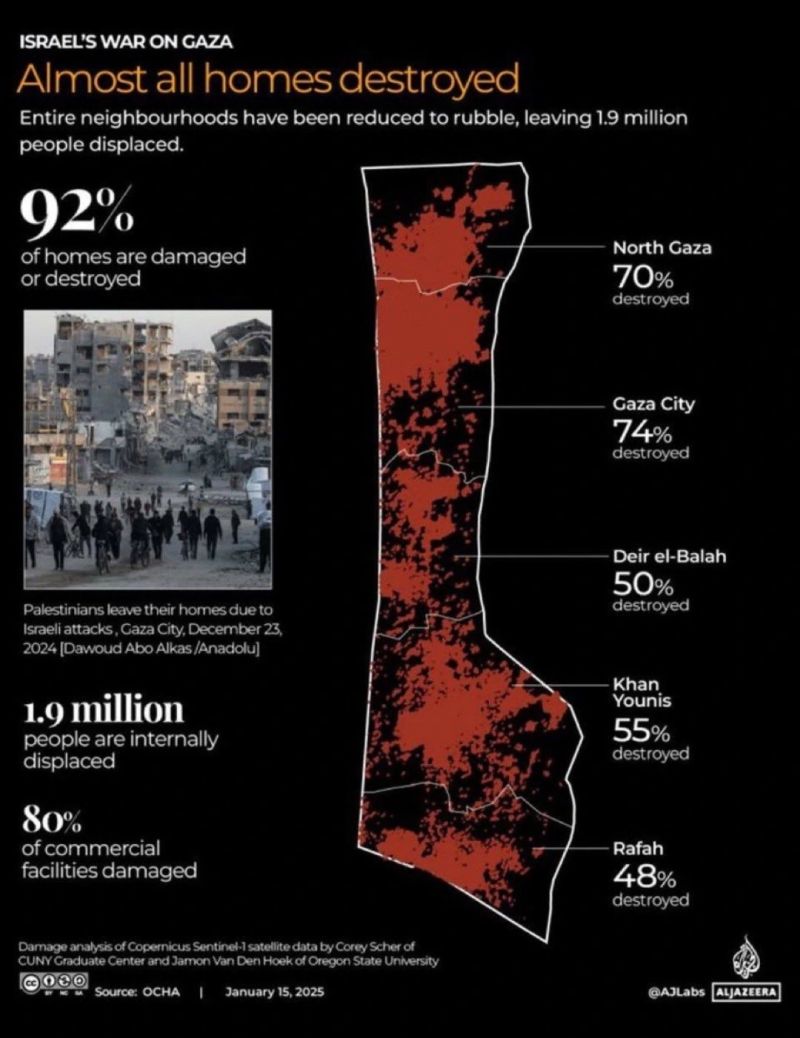
The first attack on Jabalia was a powerful slap, forcing us to leave our home, which was our only refuge. Our home was severely damaged, and our land, which we planted with our own hands, was not spared from destruction. Everything reminded us of years of work and fatigue collapsing before our eyes, yet we carried our children and left, trying to save our lives.

The Second Attack: Burning Memories
The war did not leave us a chance to recover, as in the second attack that hit Jabalia, the destruction extended to the point of burning our house completely. We lost the furniture we had collected over the years, and most importantly, we lost the irreplaceable memories: the pictures of our children, the simple gifts, all the details that were part of our identity and our lives. The scene was like saying goodbye to a part of our souls as we stood helpless in front of the flames.
The Third Attack: Blowing Up Dreams
The third attack was the harshest and most destructive. After the forced displacement and ethnic cleansing began, we had nowhere to go. Our house was completely blown up, and the trees that surrounded it were bulldozed. It was as if the war did not stop at taking away shelter and memories, but wanted to erase every trace of our lives. We became homeless, landless, memoriesless, and insecure.
Endless Suffering
Today, I write these words as I move between shelters, trying to reassure my children and convince them that the future is better, while my heart is filled with fear of the unknown. We live in indescribable conditions: bitter cold, scarce food, and pain that squeezes us whenever we remember what we have lost.
Despite all this, we try to hold on to hope, to believe that life will one day return to normal, and that we will rebuild. But the question that always remains is: For how long?
A message to the world
What is happening in Gaza, and in Jabalia in particular, is not just numbers and passing news. We are human beings who dream of safety for our children, we dream of a simple life not threatened by war. We appeal to the world to end this tragedy, to restore our right to life and dignity.

 An International Educator in Vietnam
Why should Palestinians (or anyone) respect a distinction between Jewishness and Zionism when the Israeli state is founded on – and its continued existence justified by – precisely this conflation? When the Star of David is emblazoned on the uniforms of the IDF soldiers who humiliate, torture and murder Palestinians? When, as an Australian Jew, I can settle on a kibbutz in southern Israel that was once home to the family of a Palestinian – now confined in Gaza mere kilometres away, who have to break through a barbed wire fence to “return” – simply because I am a Jew, and he is a Palestinian? (30.9.24) https://www.jewishvoiceforlabour.org.uk/article/louise-adler-to-be-silent-is-to-enable-violence/